Canada's 3.4% Growth Runs on Oil and Gas: Why That's a Problem, Not a Win
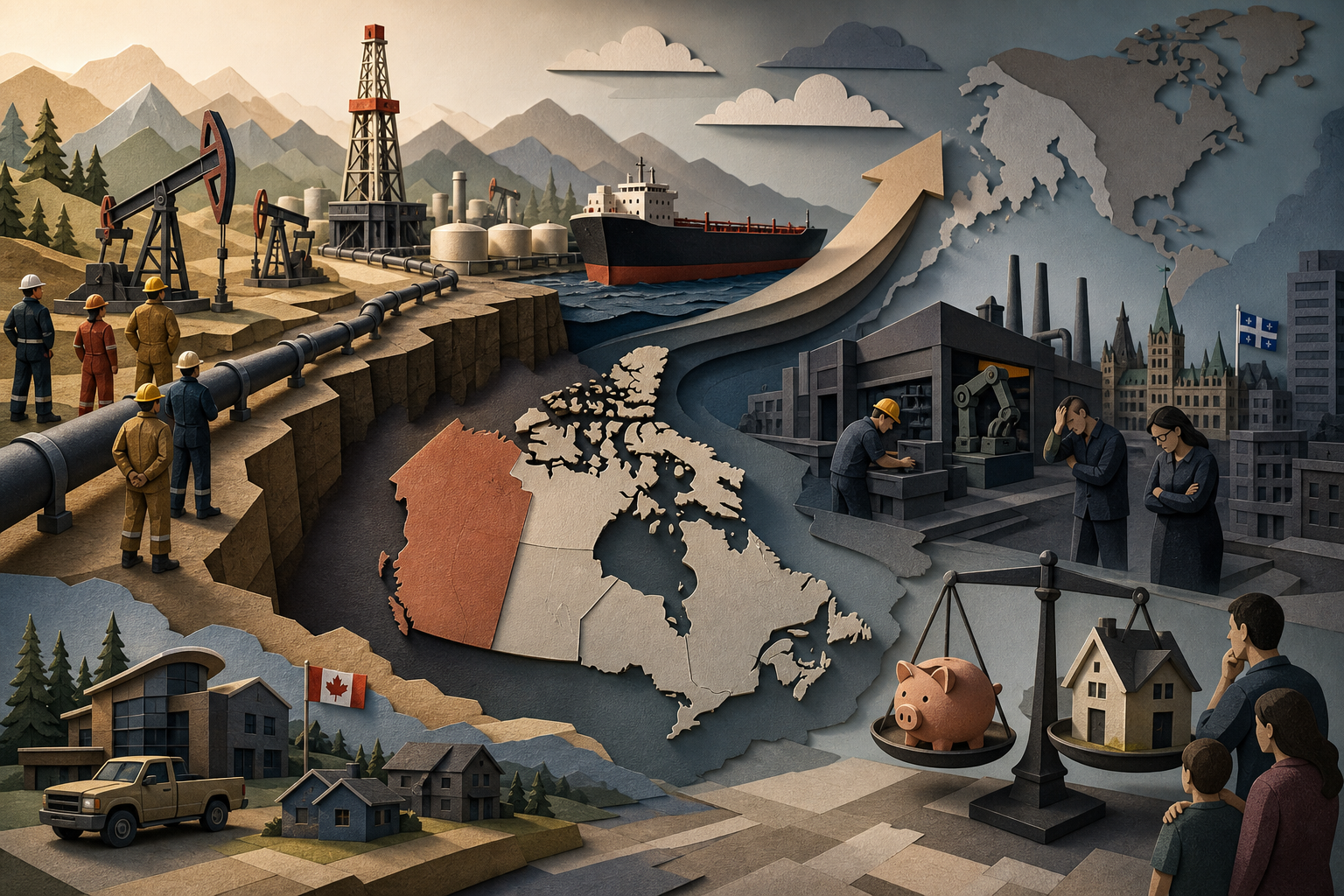
Statistics Canada released May data showing two straight months of oil and gas expansion, enough to push Q2 annualized growth toward 3.4%. Markets cheered. The Bank of Canada nodded toward holding rates longer. Alberta celebrated. Nobody mentioned that this exact pattern, energy carrying the national number while the rest of the economy goes sideways, is the same structural trap Canada has spent thirty years trying to escape.
The arithmetic looks fine on paper. Energy extraction is up. Export volumes to the U.S. are strong. GDP beats forecast. But strip out the Western provinces and the rebound disappears. Ontario manufacturing saw flat output in May. Quebec's tech sector added jobs at half the rate it did in 2024. The Maritimes barely register in the national accounts. What's being called a national recovery is really a Alberta-Saskatchewan boom with everyone else watching from the sidelines.
The Currency Problem Nobody's Talking About
When oil drives growth, the Canadian dollar strengthens. That's already happening, CAD gained 3% against USD since April. A stronger dollar makes every Ontario auto part more expensive for Detroit buyers and every Quebec aerospace component less competitive against European suppliers. The sectors that employ the bulk of Central Canada's middle class get squeezed precisely when energy provinces thrive. Economists call it Dutch Disease. The manufacturing belt calls it losing contracts.
The 1980s taught this lesson. The 2000s taught it again. Resource booms inflate the currency, hollowing out export-dependent industries that can't relocate to Fort McMurray. By the time oil prices correct, the factory floor that could have absorbed displaced workers is gone. The pattern is visible in the data: energy's share of national GDP has oscillated between 6% and 11% since 1990, but the sector now employs under 2% of the workforce. When energy surges, GDP rises and hiring doesn't follow.
Why the Bank of Canada Is Trapped
Strong headline growth gives the Bank less room to cut rates, which sounds reasonable until you consider what's actually happening in household balance sheets. The average Canadian mortgage holder is carrying a debt-to-income ratio above 180%. A 3.4% growth figure driven by capital-intensive oil extraction does nothing for someone in Mississauga with a variable-rate mortgage resetting in September. The growth and the pain are in different parts of the country, on different balance sheets, in different industries.
The Bank's mandate is national. Its tools are blunt. If it holds rates high because Alberta is booming, it punishes Ontario and BC housing markets that are already correcting. If it cuts because households are stretched, it risks re-igniting inflation in the energy provinces where wage growth is actually strong. There's no policy setting that works for both economies at once.
What a Structural Fix Would Require
A genuine rebound would show productivity gains across sectors, not volume increases in one. It would show business investment in technology, not just capital deployed to extract more bitumen. It would create jobs in fields that aren't directly tied to the global oil price. None of that is happening. May's numbers show energy up, everything else stable or down. That's not diversification. That's dependency with a fresh coat of paint.
The 3.4% figure will be revised down twice before it's finalized, the way these always are. Even if it holds, the composition matters more than the headline. An economy that grows when oil is expensive and stalls when it isn't is not resilient. It's leveraged to a single commodity whose price Canada doesn't control and whose long-term demand is structurally uncertain.
We've been here before. We'll be here again. The difference this time is that every other G7 country is racing to build the industries that will matter in 2040, while Canada celebrates hitting a number that confirms we're still exporting the same thing we exported in 1990.



Statistics Canada released May data showing two straight months of oil and gas expansion, enough to push Q2 annualized growth toward 3.4%. Markets cheered. The Bank of Canada nodded toward holding rates longer. Alberta celebrated. Nobody mentioned that this exact pattern, energy carrying the national number while the rest of the economy goes sideways, is the same structural trap Canada has spent thirty years trying to escape.
The arithmetic looks fine on paper. Energy extraction is up. Export volumes to the U.S. are strong. GDP beats forecast. But strip out the Western provinces and the rebound disappears. Ontario manufacturing saw flat output in May. Quebec's tech sector added jobs at half the rate it did in 2024. The Maritimes barely register in the national accounts. What's being called a national recovery is really a Alberta-Saskatchewan boom with everyone else watching from the sidelines.
The Currency Problem Nobody's Talking About
When oil drives growth, the Canadian dollar strengthens. That's already happening, CAD gained 3% against USD since April. A stronger dollar makes every Ontario auto part more expensive for Detroit buyers and every Quebec aerospace component less competitive against European suppliers. The sectors that employ the bulk of Central Canada's middle class get squeezed precisely when energy provinces thrive. Economists call it Dutch Disease. The manufacturing belt calls it losing contracts.
The 1980s taught this lesson. The 2000s taught it again. Resource booms inflate the currency, hollowing out export-dependent industries that can't relocate to Fort McMurray. By the time oil prices correct, the factory floor that could have absorbed displaced workers is gone. The pattern is visible in the data: energy's share of national GDP has oscillated between 6% and 11% since 1990, but the sector now employs under 2% of the workforce. When energy surges, GDP rises and hiring doesn't follow.
Why the Bank of Canada Is Trapped
Strong headline growth gives the Bank less room to cut rates, which sounds reasonable until you consider what's actually happening in household balance sheets. The average Canadian mortgage holder is carrying a debt-to-income ratio above 180%. A 3.4% growth figure driven by capital-intensive oil extraction does nothing for someone in Mississauga with a variable-rate mortgage resetting in September. The growth and the pain are in different parts of the country, on different balance sheets, in different industries.
The Bank's mandate is national. Its tools are blunt. If it holds rates high because Alberta is booming, it punishes Ontario and BC housing markets that are already correcting. If it cuts because households are stretched, it risks re-igniting inflation in the energy provinces where wage growth is actually strong. There's no policy setting that works for both economies at once.
What a Structural Fix Would Require
A genuine rebound would show productivity gains across sectors, not volume increases in one. It would show business investment in technology, not just capital deployed to extract more bitumen. It would create jobs in fields that aren't directly tied to the global oil price. None of that is happening. May's numbers show energy up, everything else stable or down. That's not diversification. That's dependency with a fresh coat of paint.
The 3.4% figure will be revised down twice before it's finalized, the way these always are. Even if it holds, the composition matters more than the headline. An economy that grows when oil is expensive and stalls when it isn't is not resilient. It's leveraged to a single commodity whose price Canada doesn't control and whose long-term demand is structurally uncertain.
We've been here before. We'll be here again. The difference this time is that every other G7 country is racing to build the industries that will matter in 2040, while Canada celebrates hitting a number that confirms we're still exporting the same thing we exported in 1990.
Read Next
How Dual Citizens Can Claim RESP Tax Benefits Without Form 3520 Reporting
Bond Markets Are Pricing In Recovery, Not the 1970s Replay Already Underway
Why Fortress Tells Private Credit Lenders to Stop Chasing AI Data Centre Deals
Canada's Tax Code Punishes Work and Rewards Wealth Hoarding: Four Reforms That Would Actually Fix It