Canada's 50% Counter-Tariff on U.S. Steel: What Stayed, What Changed, and What You Pay Now
The counter-tariff is 50%, but the story isn't the number. It's that the number hasn't moved. When the U.S. raised its Section 232 steel tariff from 25% to 50% in August 2026, Canada responded with a matching 50% counter-tariff on certain U.S. steel products, effective September 8, 2026. That rate still holds. No escalation. No rollback. The tariff that went into effect nine days ago is the same one sitting on invoices today.
What changes isn't the policy. It's the lag between when the tariff takes effect and when your project feels it.
Steel as an input, not a commodity
Steel isn't something most people buy directly. It arrives embedded in things: structural beams, rebar for a foundation, fabricated railings, or shelving systems. The 50% tariff doesn't apply to Canadian steel. It applies to U.S.-sourced steel entering Canada. If your contractor was relying on U.S. suppliers because of lead times, specialty shapes, or simply price at the time they quoted the job, that cost is now 50% higher at the border, and that increase flows to you.
According to the Department of Finance, the counter-tariff targets a specific list of products subject to the U.S. Section 232 measures, rolled steel, certain fabricated articles, and select finished goods. The list was published August 22, 2026, and came into force two weeks later. The Department of Finance's complete product list names the tariff codes affected and specifies the 50% rate.
If your renovation was quoted in July 2026, the original price assumed the pre-tariff supply chain. If procurement happened after September 8, the price reflects the new structure. The gap between those two dates is where disputes start.
What stayed the same
The tariff rate itself. It went from nothing to 50% in one step and has not moved since. There's no tiered schedule, no monthly adjustment. The uncertainty people describe isn't about the number. It's about which suppliers got locked into contracts before the change and which ones are passing the increase through.
Section 232 tariffs are U.S. trade measures justified under national security grounds. Canada had already faced a 25% Section 232 tariff on steel and aluminum starting in 2018, negotiated away in 2019, then reinstated at 25% in March 2025 and raised to 50% in June 2025, a rate that persisted through August 2026. The Canadian counter-tariff mirrors the U.S. measure and does not expire unless the U.S. removes its own measure first.
What you pay now depends on timing and sourcing
A structural steel package for a commercial build quoted in late July might have assumed U.S. fabrication, which may have offered shorter lead times than Canadian mills. If the supplier ordered after September 8, the cost has risen materially at the border due to the tariff, before markup. The contractor either absorbs it, renegotiates, or walks. That's not speculation. It's arithmetic applied to a tariff code.
Residential projects see the same lag but at smaller dollar values. Rebar for a basement, steel lintels, structural posts, if those came from a U.S. supplier filling an order placed in September, the 50% tariff is already in the price. If the quote came earlier and the supplier held inventory from before September 8, the cost stayed lower.
A fabricator who sources domestically sees no direct tariff impact. One who relied on U.S. mills for specialty sections now faces a choice: find a Canadian supplier, absorb the cost, or pass it to the client. All three are happening simultaneously across different projects, which is why two contractors quoting the same scope in the same city can differ materially on steel costs alone.
The rate is 50%. It hasn't changed since September 8. What's changing is how many invoices now carry it.


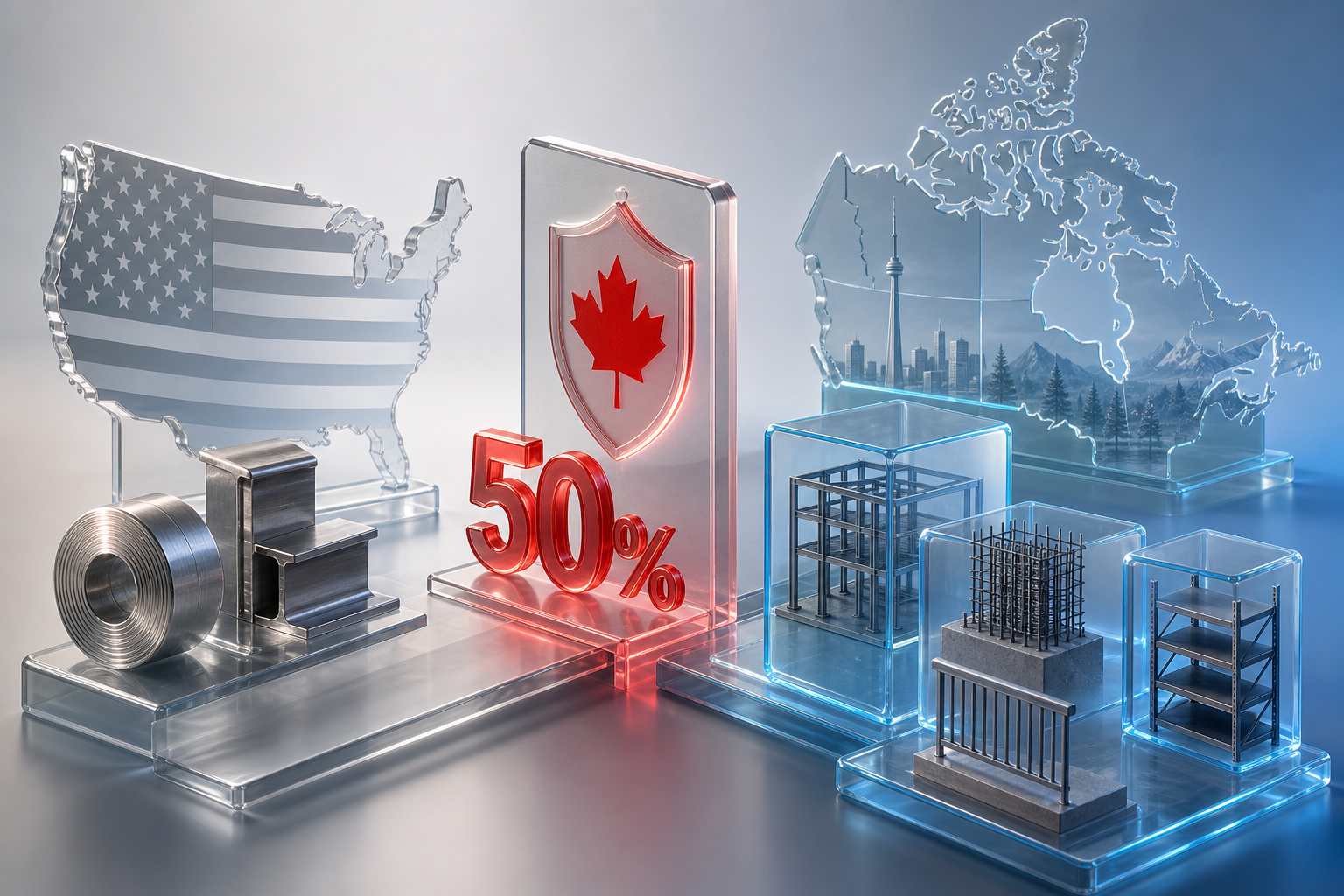

The counter-tariff is 50%, but the story isn't the number. It's that the number hasn't moved. When the U.S. raised its Section 232 steel tariff from 25% to 50% in August 2026, Canada responded with a matching 50% counter-tariff on certain U.S. steel products, effective September 8, 2026. That rate still holds. No escalation. No rollback. The tariff that went into effect nine days ago is the same one sitting on invoices today.
What changes isn't the policy. It's the lag between when the tariff takes effect and when your project feels it.
Steel as an input, not a commodity
Steel isn't something most people buy directly. It arrives embedded in things: structural beams, rebar for a foundation, fabricated railings, or shelving systems. The 50% tariff doesn't apply to Canadian steel. It applies to U.S.-sourced steel entering Canada. If your contractor was relying on U.S. suppliers because of lead times, specialty shapes, or simply price at the time they quoted the job, that cost is now 50% higher at the border, and that increase flows to you.
According to the Department of Finance, the counter-tariff targets a specific list of products subject to the U.S. Section 232 measures, rolled steel, certain fabricated articles, and select finished goods. The list was published August 22, 2026, and came into force two weeks later. The Department of Finance's complete product list names the tariff codes affected and specifies the 50% rate.
If your renovation was quoted in July 2026, the original price assumed the pre-tariff supply chain. If procurement happened after September 8, the price reflects the new structure. The gap between those two dates is where disputes start.
What stayed the same
The tariff rate itself. It went from nothing to 50% in one step and has not moved since. There's no tiered schedule, no monthly adjustment. The uncertainty people describe isn't about the number. It's about which suppliers got locked into contracts before the change and which ones are passing the increase through.
Section 232 tariffs are U.S. trade measures justified under national security grounds. Canada had already faced a 25% Section 232 tariff on steel and aluminum starting in 2018, negotiated away in 2019, then reinstated at 25% in March 2025 and raised to 50% in June 2025, a rate that persisted through August 2026. The Canadian counter-tariff mirrors the U.S. measure and does not expire unless the U.S. removes its own measure first.
What you pay now depends on timing and sourcing
A structural steel package for a commercial build quoted in late July might have assumed U.S. fabrication, which may have offered shorter lead times than Canadian mills. If the supplier ordered after September 8, the cost has risen materially at the border due to the tariff, before markup. The contractor either absorbs it, renegotiates, or walks. That's not speculation. It's arithmetic applied to a tariff code.
Residential projects see the same lag but at smaller dollar values. Rebar for a basement, steel lintels, structural posts, if those came from a U.S. supplier filling an order placed in September, the 50% tariff is already in the price. If the quote came earlier and the supplier held inventory from before September 8, the cost stayed lower.
A fabricator who sources domestically sees no direct tariff impact. One who relied on U.S. mills for specialty sections now faces a choice: find a Canadian supplier, absorb the cost, or pass it to the client. All three are happening simultaneously across different projects, which is why two contractors quoting the same scope in the same city can differ materially on steel costs alone.
The rate is 50%. It hasn't changed since September 8. What's changing is how many invoices now carry it.
Sources
Read Next
How Dual Citizens Can Claim RESP Tax Benefits Without Form 3520 Reporting
Bond Markets Are Pricing In Recovery, Not the 1970s Replay Already Underway
Why Fortress Tells Private Credit Lenders to Stop Chasing AI Data Centre Deals
Canada's Tax Code Punishes Work and Rewards Wealth Hoarding: Four Reforms That Would Actually Fix It