Canada's Apartment Boom Isn't Overbuilding, It's Correcting a Decade of Scarcity
Vancouver added 8,700 purpose-built rental units in 2024. Toronto brought on another 12,000. Calgary's skyline sprouted rental towers at a pace not seen since the 1970s. And still, the national vacancy rate sits at 1.5%, the lowest it's been in forty years.
The question making rounds in boardrooms is whether all this construction will finally tip the market into oversupply. It won't. The baseline was catastrophically low to begin with. CMHC estimated in 2023 that Canada needs 3.5 million additional housing units by 2030 just to restore affordability to 2004 levels.
The Shadow Rental Era Left Us Short
For two decades, Canada's rental supply came mostly from investor-owned condos. Developers built condos, sold them to retail buyers, and those buyers rented them out. That model worked when mortgage rates were under 3% and speculators could flip units at closing. It collapsed when rates hit 5%. The result: purpose-built rental construction fell to near zero between 2005 and 2020. The shortfall wasn't abstract. CMHC estimated in 2023 that Canada needs 3.5 million additional housing units by 2030 just to restore affordability to 2004 levels. The apartment surge we're seeing now is trying to close a gap that grew for fifteen years while nobody was looking.
Most new supply lands in Toronto, Vancouver, and Calgary, the same cities where immigration concentrates and where homeownership has priced out the middle class. A 35-year-old household earning $95,000 cannot afford the median home in either Toronto or Vancouver under current stress-test rules. They rent. So does the next cohort, and the one after that. The apartment pipeline isn't speculative. It's serving demand that already exists and has nowhere else to go.
The Overbuilding Claim Mistakes Luxury for Market
The "too many apartments" argument usually points to a handful of high-end projects sitting with empty units. Fair observation, wrong conclusion. A glut of $3,200 studio apartments in one downtown corridor doesn't solve the shortage of $1,800 two-bedrooms in the inner suburbs. The luxury segment can overshoot. The attainable segment is still years behind.
Developer math has shifted hard toward rentals because the built-for-sale model no longer pencils. High construction costs, high interest rates, and weak presale absorption have made condo projects unfinanceable in most markets. The federal GST rebate on new rental construction, introduced late 2023, moved the margin just enough to make purpose-built rentals viable again. Institutional investors, pension funds, REITs, now prioritize rental assets because the cash flow is steady and predictable, unlike the volatility of office or retail leases.
The Risk Isn't Oversupply, It's Policy Reversal
If there's a vulnerability, it's policy dependence. Much of the current boom runs on government incentives: the GST rebate, low-cost financing through the Apartment Construction Loan Program, and municipal zoning changes that permit higher density near transit. Roll any of those back and the pipeline stalls. A future government less committed to rental supply could dry up construction before the market reaches anything close to saturation.
The other risk is convergence. If interest rates drop sharply, developers might pivot back to condos, where margins are higher and exit is faster. The rental momentum we're seeing now isn't locked in. It's contingent on conditions that could shift within eighteen months.
Vacancy rates will eventually climb. They have to. But moving from 1.5% to 3% isn't oversupply. It's a functional market where tenants have options and rents stabilize. The apartment boom looks excessive only if you forget what normal was supposed to be.


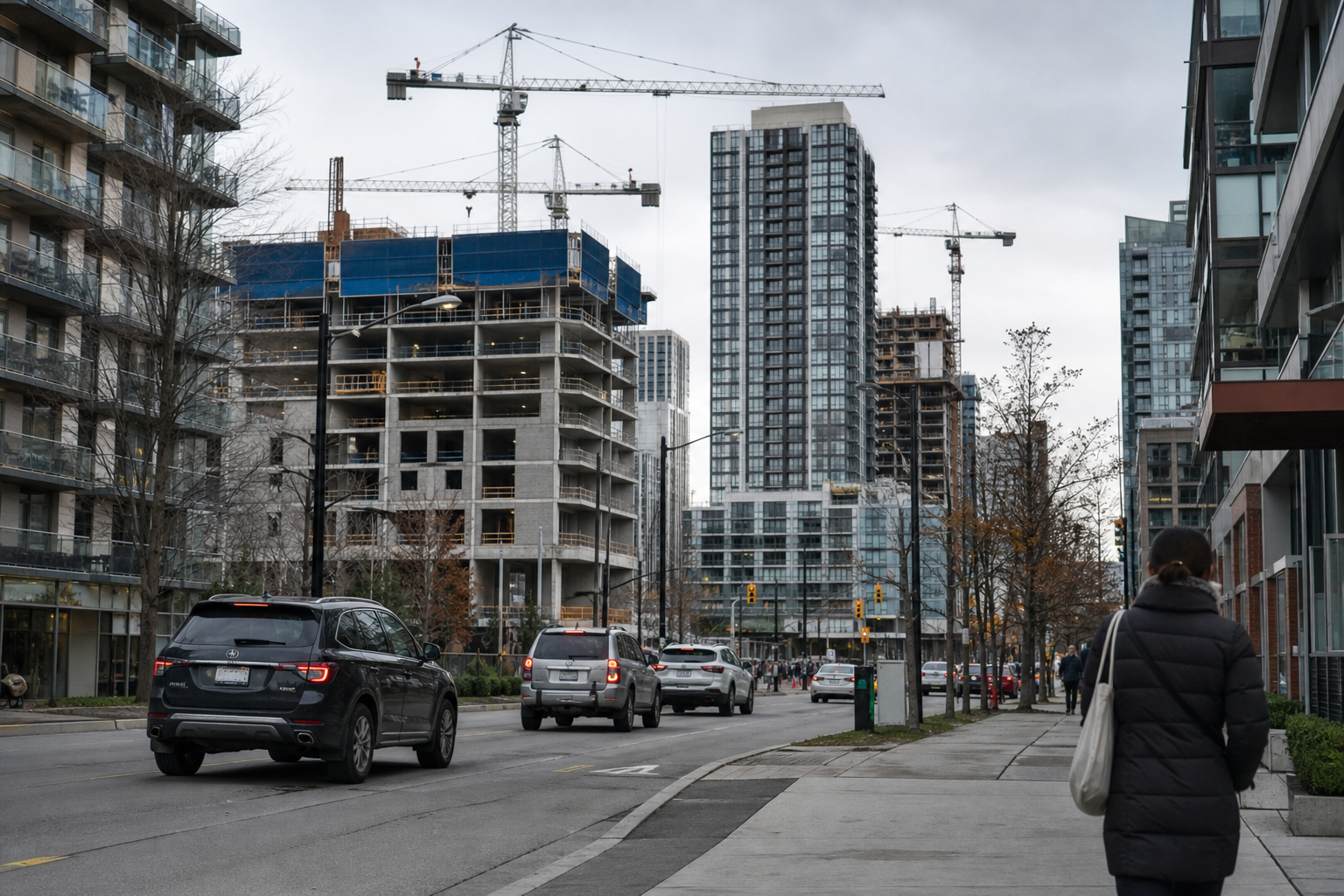

Vancouver added 8,700 purpose-built rental units in 2024. Toronto brought on another 12,000. Calgary's skyline sprouted rental towers at a pace not seen since the 1970s. And still, the national vacancy rate sits at 1.5%, the lowest it's been in forty years.
The question making rounds in boardrooms is whether all this construction will finally tip the market into oversupply. It won't. The baseline was catastrophically low to begin with. CMHC estimated in 2023 that Canada needs 3.5 million additional housing units by 2030 just to restore affordability to 2004 levels.
The Shadow Rental Era Left Us Short
For two decades, Canada's rental supply came mostly from investor-owned condos. Developers built condos, sold them to retail buyers, and those buyers rented them out. That model worked when mortgage rates were under 3% and speculators could flip units at closing. It collapsed when rates hit 5%. The result: purpose-built rental construction fell to near zero between 2005 and 2020. The shortfall wasn't abstract. CMHC estimated in 2023 that Canada needs 3.5 million additional housing units by 2030 just to restore affordability to 2004 levels. The apartment surge we're seeing now is trying to close a gap that grew for fifteen years while nobody was looking.
Most new supply lands in Toronto, Vancouver, and Calgary, the same cities where immigration concentrates and where homeownership has priced out the middle class. A 35-year-old household earning $95,000 cannot afford the median home in either Toronto or Vancouver under current stress-test rules. They rent. So does the next cohort, and the one after that. The apartment pipeline isn't speculative. It's serving demand that already exists and has nowhere else to go.
The Overbuilding Claim Mistakes Luxury for Market
The "too many apartments" argument usually points to a handful of high-end projects sitting with empty units. Fair observation, wrong conclusion. A glut of $3,200 studio apartments in one downtown corridor doesn't solve the shortage of $1,800 two-bedrooms in the inner suburbs. The luxury segment can overshoot. The attainable segment is still years behind.
Developer math has shifted hard toward rentals because the built-for-sale model no longer pencils. High construction costs, high interest rates, and weak presale absorption have made condo projects unfinanceable in most markets. The federal GST rebate on new rental construction, introduced late 2023, moved the margin just enough to make purpose-built rentals viable again. Institutional investors, pension funds, REITs, now prioritize rental assets because the cash flow is steady and predictable, unlike the volatility of office or retail leases.
The Risk Isn't Oversupply, It's Policy Reversal
If there's a vulnerability, it's policy dependence. Much of the current boom runs on government incentives: the GST rebate, low-cost financing through the Apartment Construction Loan Program, and municipal zoning changes that permit higher density near transit. Roll any of those back and the pipeline stalls. A future government less committed to rental supply could dry up construction before the market reaches anything close to saturation.
The other risk is convergence. If interest rates drop sharply, developers might pivot back to condos, where margins are higher and exit is faster. The rental momentum we're seeing now isn't locked in. It's contingent on conditions that could shift within eighteen months.
Vacancy rates will eventually climb. They have to. But moving from 1.5% to 3% isn't oversupply. It's a functional market where tenants have options and rents stabilize. The apartment boom looks excessive only if you forget what normal was supposed to be.
Read Next
How Dual Citizens Can Claim RESP Tax Benefits Without Form 3520 Reporting
Bond Markets Are Pricing In Recovery, Not the 1970s Replay Already Underway
Why Fortress Tells Private Credit Lenders to Stop Chasing AI Data Centre Deals
Canada's Tax Code Punishes Work and Rewards Wealth Hoarding: Four Reforms That Would Actually Fix It