Seven Years of Late Tax Returns Cost One Canadian $18,000 in Penalties
The Federal Court of Canada turned down a man's request to waive $18,000 in penalties this spring, seven years after his pattern of chronic late filing began. He had asked for relief under subsection 220(3.1) of the Income Tax Act, the provision that lets the Minister of National Revenue forgive penalties in extraordinary circumstances. The court found the CRA's refusal reasonable. The taxpayer had filed late in multiple years, not one.
The Penalty Structure Nobody Reads
Canada's late-filing penalty starts at 5% of the balance owing, plus 1% for each full month the return is late, up to twelve months. That's the first-time rate. If you've been hit with a late-filing penalty in any of the prior three years, the rate doubles: 10% of the balance owing, plus 2% per month, up to twenty months. The Income Tax Act calls this the "repeat failure" penalty, and it exists because the system assumes you learned the lesson the first time.
The man in this case didn't owe money every year. Some years he was due a refund. Filing late when you're owed money carries no penalty, the CRA can't fine you for delaying your own cheque. But those late filings still went on his record. When he eventually filed a return where he owed tax, the prior delays turned the standard 5% penalty into the 10% repeat-offender rate. The CRA's computers don't distinguish between "couldn't pay" and "didn't file." They flag the pattern.
Why Courts Rarely Overturn the CRA
Judicial review isn't an appeal of the tax assessment itself. It's a check on whether the CRA's decision to refuse relief was reasonable, a high bar. The court doesn't re-evaluate the taxpayer's hardship. It asks whether the Minister considered the evidence and applied the rules without being patently irrational.
In this case, the taxpayer had filed late across multiple years spanning nearly a decade. The CRA's decision letter noted the pattern and concluded it reflected non-compliance, not extraordinary circumstances. The court agreed. A multi-year habit of late filing, rather than a single delay caused by a house fire or medical emergency, does not qualify for relief.
The Income Tax Act gives taxpayers ten years to request relief. In 2026, you can ask the CRA to waive penalties or interest going back to 2016. But the longer the pattern, the weaker the case. The CRA maintains a full digital filing history. A taxpayer who was late in 2019, 2020, and 2022 will have a harder time arguing that their 2025 delay was a one-off crisis, even if the crisis was real.
The Interest Compounds While You Wait
Beyond the flat penalty, the CRA charges compound daily interest on unpaid balances. The prescribed rate for the third quarter of 2026 sits at 7%, a function of the Bank of Canada's policy rate plus 4%. Over several years, that interest can exceed the original penalty. A $10,000 balance owing in 2021, left unpaid until 2026, would accrue roughly $4,500 in interest at that rate, before accounting for the penalty itself.
Filing on time eliminates the late-filing penalty entirely, even if you can't pay the balance. You'll still owe interest on the unpaid amount, but the 5% or 10% flat charge disappears. The CRA treats the act of filing as proof of good faith. Not filing, regardless of your ability to pay, is treated as non-compliance.
The man who lost this case will pay the $18,000. The Federal Court's ruling is final unless appealed to a higher court, and the grounds for appeal are narrow. His filing history is now permanent. If he's late again within the next three years, the penalty rate will be 10% again.


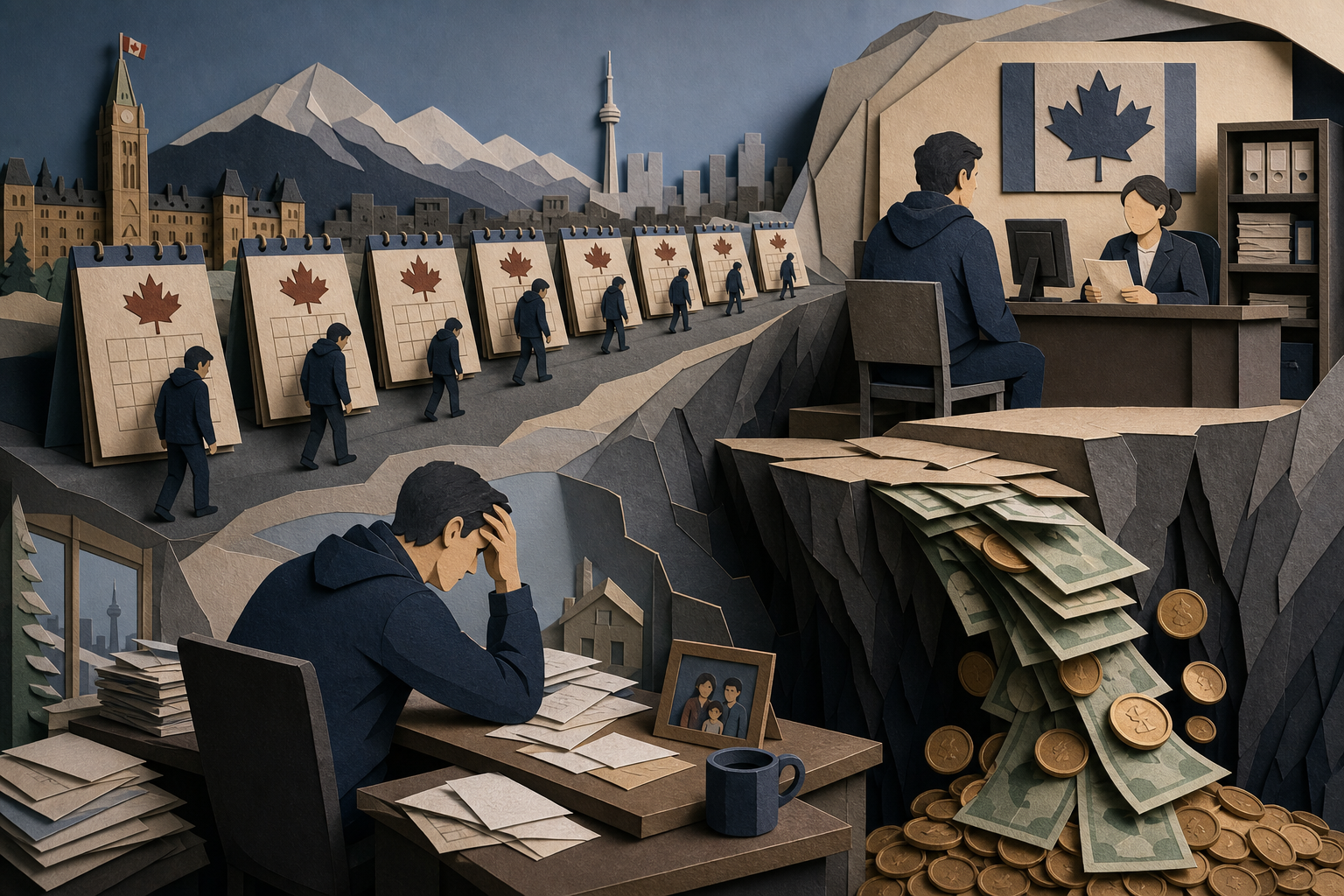

The Federal Court of Canada turned down a man's request to waive $18,000 in penalties this spring, seven years after his pattern of chronic late filing began. He had asked for relief under subsection 220(3.1) of the Income Tax Act, the provision that lets the Minister of National Revenue forgive penalties in extraordinary circumstances. The court found the CRA's refusal reasonable. The taxpayer had filed late in multiple years, not one.
The Penalty Structure Nobody Reads
Canada's late-filing penalty starts at 5% of the balance owing, plus 1% for each full month the return is late, up to twelve months. That's the first-time rate. If you've been hit with a late-filing penalty in any of the prior three years, the rate doubles: 10% of the balance owing, plus 2% per month, up to twenty months. The Income Tax Act calls this the "repeat failure" penalty, and it exists because the system assumes you learned the lesson the first time.
The man in this case didn't owe money every year. Some years he was due a refund. Filing late when you're owed money carries no penalty, the CRA can't fine you for delaying your own cheque. But those late filings still went on his record. When he eventually filed a return where he owed tax, the prior delays turned the standard 5% penalty into the 10% repeat-offender rate. The CRA's computers don't distinguish between "couldn't pay" and "didn't file." They flag the pattern.
Why Courts Rarely Overturn the CRA
Judicial review isn't an appeal of the tax assessment itself. It's a check on whether the CRA's decision to refuse relief was reasonable, a high bar. The court doesn't re-evaluate the taxpayer's hardship. It asks whether the Minister considered the evidence and applied the rules without being patently irrational.
In this case, the taxpayer had filed late across multiple years spanning nearly a decade. The CRA's decision letter noted the pattern and concluded it reflected non-compliance, not extraordinary circumstances. The court agreed. A multi-year habit of late filing, rather than a single delay caused by a house fire or medical emergency, does not qualify for relief.
The Income Tax Act gives taxpayers ten years to request relief. In 2026, you can ask the CRA to waive penalties or interest going back to 2016. But the longer the pattern, the weaker the case. The CRA maintains a full digital filing history. A taxpayer who was late in 2019, 2020, and 2022 will have a harder time arguing that their 2025 delay was a one-off crisis, even if the crisis was real.
The Interest Compounds While You Wait
Beyond the flat penalty, the CRA charges compound daily interest on unpaid balances. The prescribed rate for the third quarter of 2026 sits at 7%, a function of the Bank of Canada's policy rate plus 4%. Over several years, that interest can exceed the original penalty. A $10,000 balance owing in 2021, left unpaid until 2026, would accrue roughly $4,500 in interest at that rate, before accounting for the penalty itself.
Filing on time eliminates the late-filing penalty entirely, even if you can't pay the balance. You'll still owe interest on the unpaid amount, but the 5% or 10% flat charge disappears. The CRA treats the act of filing as proof of good faith. Not filing, regardless of your ability to pay, is treated as non-compliance.
The man who lost this case will pay the $18,000. The Federal Court's ruling is final unless appealed to a higher court, and the grounds for appeal are narrow. His filing history is now permanent. If he's late again within the next three years, the penalty rate will be 10% again.
Sources
Read Next
How Dual Citizens Can Claim RESP Tax Benefits Without Form 3520 Reporting
Bond Markets Are Pricing In Recovery, Not the 1970s Replay Already Underway
Why Fortress Tells Private Credit Lenders to Stop Chasing AI Data Centre Deals
Canada's Tax Code Punishes Work and Rewards Wealth Hoarding: Four Reforms That Would Actually Fix It