The Seven Issues Blocking a Canada-U.S. Trade Deal Before 50% Tariffs Hit
Canada's chief trade negotiator sent a message to government advisors this week that no one wanted to hear: the amount of work left on the table is substantial, and the deadline is six days out.
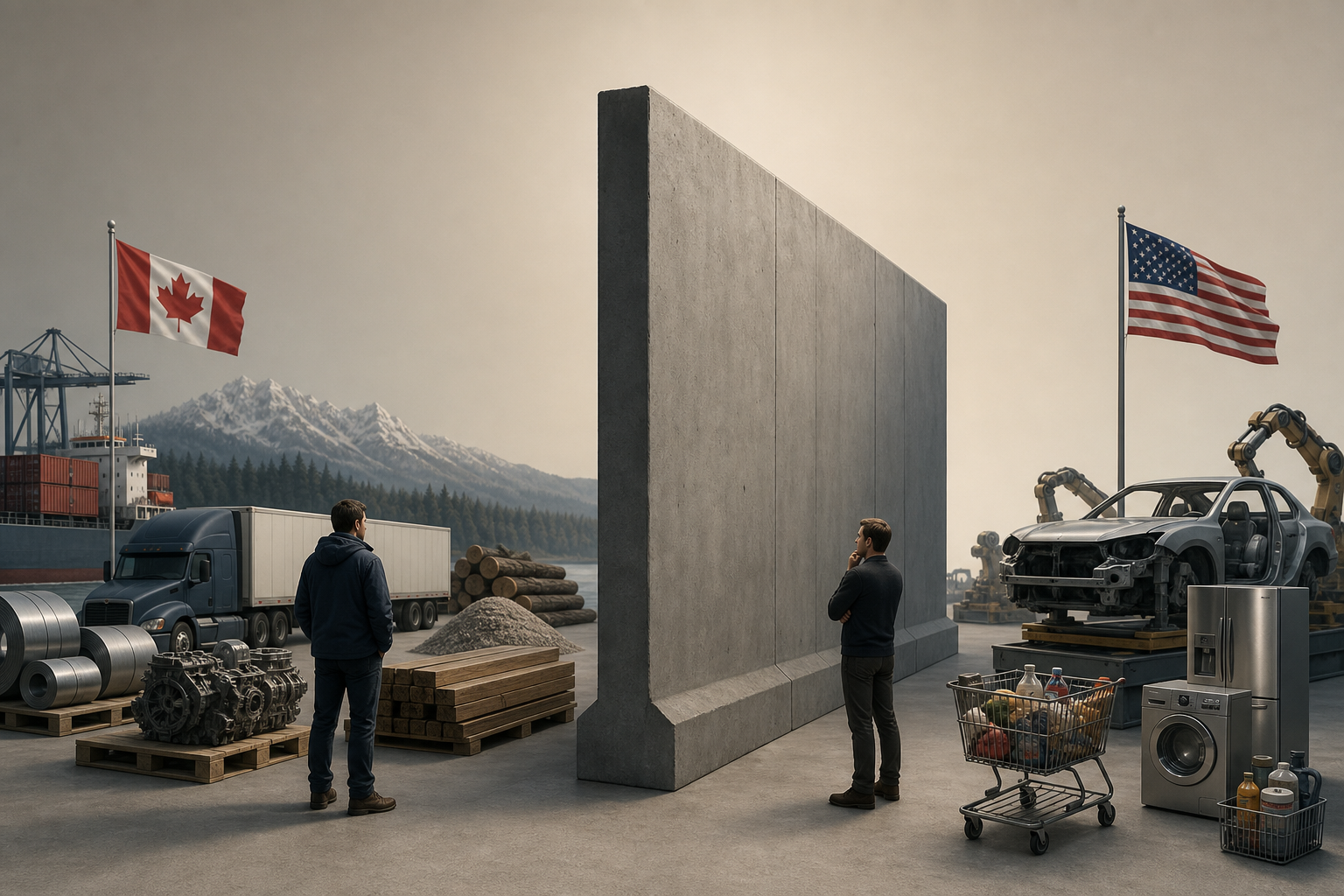
The tariffs in question are not the usual 10% steel-and-aluminum rounds that get negotiated down to exemptions and quotas. These are 50%. At that level, the tariff is not a revenue tool. It is a wall. A 50% levy on Canadian automotive parts, aerospace components, or raw materials effectively ends the trade in those goods, at least temporarily, because the landed cost becomes prohibitive for U.S. manufacturers who rely on cross-border supply chains. Over $3.6 billion CAD (or US$2.6 billion) in goods cross the border daily. A tariff at this rate does not slow that flow, it stops it.
The structural problem with prohibitive tariffs
The U.S. framing of the 50% figure suggests maximum leverage, not a negotiating midpoint. In past disputes, steel in 2018, aluminum in 2020, the opening tariff was 10% to 25%, with carve-outs negotiated within months. A 50% rate is the kind of number you use when the goal is not to collect revenue but to force a specific concession immediately. The problem is that tariffs at this level are inflationary for both sides. U.S. companies that source Canadian inputs face a sudden, massive cost increase. Canadian exporters lose their largest customer overnight. Neither economy absorbs that cleanly.
The negotiator's statement, "significant work", is standard diplomatic phrasing, but the timing is not. Six days before implementation, you expect either a deal framework or a delay announcement. What you do not expect is a public acknowledgment that major sticking points remain unresolved. That language is usually reserved for managing expectations downward, either to prepare industry for the worst or to signal to the U.S. side that Canada is not ready to fold.
What the sticking points likely are
Trade negotiations at this scale rarely hinge on a single issue. The typical blockers in Canada-U.S. disputes are structural: dairy supply management, which protects Canadian producers but limits U.S. market access; softwood lumber, a recurring irritant since the 1980s; and, more recently, digital services taxes that U.S. tech companies argue discriminate against American firms. Any one of these could be the current impasse. More likely, it is all three, plus a few items kept entirely off the public record.
The CUSMA review cycle, which allows periodic re-evaluation of trade terms, was designed to handle these disputes without triggering full renegotiations. The 50% tariff threat suggests that mechanism has broken down, at least temporarily. When the normal dispute-resolution process stalls, the fallback is raw economic pressure, and 50% is about as raw as it gets.
The inflationary backfire
Canada has historically responded to U.S. tariffs under Section 232 or similar provisions with dollar-for-dollar retaliation. If the U.S. imposes $10 billion in tariffs on Canadian goods, Canada targets $10 billion of U.S. exports, usually consumer goods, agricultural products, or politically sensitive items that create pressure on U.S. legislators. That playbook is well understood. What is less predictable this time is the inflationary effect. Canada is still working to stabilize inflation and Bank of Canada holding rates at 2.25% since early 2026; inflation at 2.8% in June 2026. A trade war that raises the cost of imported goods feeds directly into that problem. The Bank of Canada would face pressure to Bank holding at 2.25%; next move uncertain, which hits mortgage holders and real estate markets immediately.
For U.S. consumers, the cost shows up in anything built with Canadian aluminum, steel, or wood. The tariff does not punish Canada in isolation. It punishes the integrated supply chain that both countries depend on.
The midnight-deal precedent
Hard deadlines and late-stage public pessimism are standard features of high-stakes trade talks. The original NAFTA renegotiation in 2018 followed this pattern: repeated missed deadlines, public statements about unbridgeable gaps, then a deal signed at the last possible moment. The question is whether that precedent holds when the opening tariff is prohibitive rather than punitive. At 50%, there is less room for the gradual walk-down that makes a midnight deal possible. Either the concession happens, or the tariff does.
The negotiator's update was not an announcement of failure. But it was a clear signal that the path to a deal, if one exists, is narrow and the time to walk it is almost gone.



Canada's chief trade negotiator sent a message to government advisors this week that no one wanted to hear: the amount of work left on the table is substantial, and the deadline is six days out.
The tariffs in question are not the usual 10% steel-and-aluminum rounds that get negotiated down to exemptions and quotas. These are 50%. At that level, the tariff is not a revenue tool. It is a wall. A 50% levy on Canadian automotive parts, aerospace components, or raw materials effectively ends the trade in those goods, at least temporarily, because the landed cost becomes prohibitive for U.S. manufacturers who rely on cross-border supply chains. Over $3.6 billion CAD (or US$2.6 billion) in goods cross the border daily. A tariff at this rate does not slow that flow, it stops it.
The structural problem with prohibitive tariffs
The U.S. framing of the 50% figure suggests maximum leverage, not a negotiating midpoint. In past disputes, steel in 2018, aluminum in 2020, the opening tariff was 10% to 25%, with carve-outs negotiated within months. A 50% rate is the kind of number you use when the goal is not to collect revenue but to force a specific concession immediately. The problem is that tariffs at this level are inflationary for both sides. U.S. companies that source Canadian inputs face a sudden, massive cost increase. Canadian exporters lose their largest customer overnight. Neither economy absorbs that cleanly.
The negotiator's statement, "significant work", is standard diplomatic phrasing, but the timing is not. Six days before implementation, you expect either a deal framework or a delay announcement. What you do not expect is a public acknowledgment that major sticking points remain unresolved. That language is usually reserved for managing expectations downward, either to prepare industry for the worst or to signal to the U.S. side that Canada is not ready to fold.
What the sticking points likely are
Trade negotiations at this scale rarely hinge on a single issue. The typical blockers in Canada-U.S. disputes are structural: dairy supply management, which protects Canadian producers but limits U.S. market access; softwood lumber, a recurring irritant since the 1980s; and, more recently, digital services taxes that U.S. tech companies argue discriminate against American firms. Any one of these could be the current impasse. More likely, it is all three, plus a few items kept entirely off the public record.
The CUSMA review cycle, which allows periodic re-evaluation of trade terms, was designed to handle these disputes without triggering full renegotiations. The 50% tariff threat suggests that mechanism has broken down, at least temporarily. When the normal dispute-resolution process stalls, the fallback is raw economic pressure, and 50% is about as raw as it gets.
The inflationary backfire
Canada has historically responded to U.S. tariffs under Section 232 or similar provisions with dollar-for-dollar retaliation. If the U.S. imposes $10 billion in tariffs on Canadian goods, Canada targets $10 billion of U.S. exports, usually consumer goods, agricultural products, or politically sensitive items that create pressure on U.S. legislators. That playbook is well understood. What is less predictable this time is the inflationary effect. Canada is still working to stabilize inflation and Bank of Canada holding rates at 2.25% since early 2026; inflation at 2.8% in June 2026. A trade war that raises the cost of imported goods feeds directly into that problem. The Bank of Canada would face pressure to Bank holding at 2.25%; next move uncertain, which hits mortgage holders and real estate markets immediately.
For U.S. consumers, the cost shows up in anything built with Canadian aluminum, steel, or wood. The tariff does not punish Canada in isolation. It punishes the integrated supply chain that both countries depend on.
The midnight-deal precedent
Hard deadlines and late-stage public pessimism are standard features of high-stakes trade talks. The original NAFTA renegotiation in 2018 followed this pattern: repeated missed deadlines, public statements about unbridgeable gaps, then a deal signed at the last possible moment. The question is whether that precedent holds when the opening tariff is prohibitive rather than punitive. At 50%, there is less room for the gradual walk-down that makes a midnight deal possible. Either the concession happens, or the tariff does.
The negotiator's update was not an announcement of failure. But it was a clear signal that the path to a deal, if one exists, is narrow and the time to walk it is almost gone.
Sources
Read Next
How Dual Citizens Can Claim RESP Tax Benefits Without Form 3520 Reporting
Bond Markets Are Pricing In Recovery, Not the 1970s Replay Already Underway
Why Fortress Tells Private Credit Lenders to Stop Chasing AI Data Centre Deals
Canada's Tax Code Punishes Work and Rewards Wealth Hoarding: Four Reforms That Would Actually Fix It