Trump's Forced Labor Tariffs Hit Canada With a Trade Weapon Dressed as Human Rights Policy
Ottawa's Fighting Against Forced Labour and Child Labour in Supply Chains Act went into effect in 2024. The U.S. just signaled it isn't impressed.
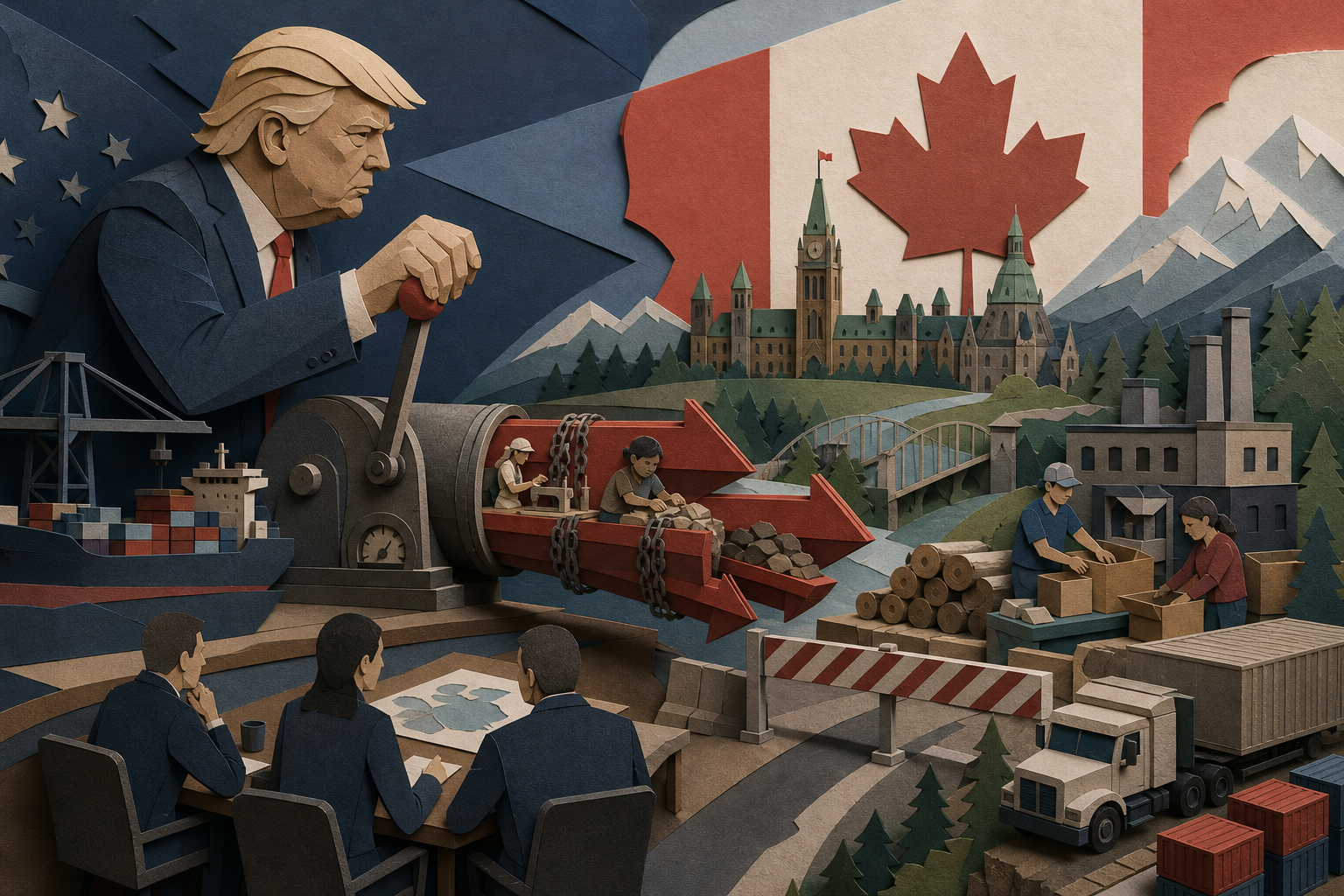
President Trump announced this week that dozens of countries, Canada included, will face new sector-specific tariffs tied to forced labour enforcement. The measures replace a 10% global duty set to expire July 31, 2026, and shift from blanket protectionism to something narrower but sharper: a values-based trade weapon with human rights branding and enforcement teeth aimed at specific supply chains. The White House framed it as an incentive structure. Countries that don't crack down hard enough on modern slavery in their exports get hit. Countries that do, theoretically, don't.
That framing collapses under scrutiny. The forced labour clause exists within CUSMA itself, the Canada-United States-Mexico Agreement, as an exception to normal trade protections. By invoking it, the U.S. bypasses the procedural safeguards the treaty was supposed to guarantee. Canada thought it had done the homework. Parliament passed supply chain transparency legislation. Companies now file reports. The problem is that reporting and enforcement are not the same animal, and the U.S. is acting as global auditor.
Why Canada Got Named
The geopolitical subtext here isn't subtle. The U.S. is increasingly worried about transshipment: goods from third-party nations, particularly China, entering through Canada or Mexico to dodge tariffs. By targeting Canada explicitly, the administration is signaling that proximity to the U.S. market no longer buys preferential treatment if the supply chain upstream remains opaque. Canada's legislative framework may meet the letter of international norms, but Washington is now demanding seizures, audits, and enforcement actions that look like the U.S. Customs and Border Protection model, something Ottawa has historically resisted on sovereignty grounds.
The timing matters as much as the policy. CUSMA's mandatory joint review is set for 2026. These tariffs land as a pre-negotiation pressure move, giving the U.S. leverage before anyone sits down at the table. Call it a shot across the bow with a footnote about forced labour.
The Enforcement Paradox
Here's where the policy gets messy. Defining which Canadian goods contain forced labour inputs isn't straightforward. U.S. Customs lacks the technological infrastructure to trace every widget back through five supplier tiers in real time. So enforcement will be selective, which means discretionary, which means political. The administration gets to decide which sectors feel pain and when.
Canada has a predictable playbook for this. In 2018, when the U.S. imposed steel and aluminum tariffs, Ottawa retaliated dollar-for-dollar with a carefully curated list of American products designed to hit swing districts. Expect the same calculus now. Canadian officials are likely already drafting a proportional response targeting U.S. goods that matter in states the administration can't afford to alienate.
The domestic cost is real, too. Roughly $3.6 billion in Canadian imports to the U.S. were previously affected by broad tariff measures; this new regime narrows the scope but raises the per-unit impact. Lumber, minerals, auto parts, goods that feed U.S. supply chains, will cost more. That's inflationary pressure dressed up as moral policy.
What Gets Called Principle
Strip the human rights language and what remains is a tariff regime with two functions: it pressures Canada to decouple faster from manufacturing hubs the U.S. views as problematic, and it arms the administration with discretionary trade enforcement ahead of 2026 treaty talks.
Canada's current law requires disclosure. The U.S. wants audits, seizures, public penalties. The gap between those two positions is the space where this tariff lives. Whether it actually reduces forced labour in global supply chains is a question no one in Washington seems particularly interested in answering.



Ottawa's Fighting Against Forced Labour and Child Labour in Supply Chains Act went into effect in 2024. The U.S. just signaled it isn't impressed.
President Trump announced this week that dozens of countries, Canada included, will face new sector-specific tariffs tied to forced labour enforcement. The measures replace a 10% global duty set to expire July 31, 2026, and shift from blanket protectionism to something narrower but sharper: a values-based trade weapon with human rights branding and enforcement teeth aimed at specific supply chains. The White House framed it as an incentive structure. Countries that don't crack down hard enough on modern slavery in their exports get hit. Countries that do, theoretically, don't.
That framing collapses under scrutiny. The forced labour clause exists within CUSMA itself, the Canada-United States-Mexico Agreement, as an exception to normal trade protections. By invoking it, the U.S. bypasses the procedural safeguards the treaty was supposed to guarantee. Canada thought it had done the homework. Parliament passed supply chain transparency legislation. Companies now file reports. The problem is that reporting and enforcement are not the same animal, and the U.S. is acting as global auditor.
Why Canada Got Named
The geopolitical subtext here isn't subtle. The U.S. is increasingly worried about transshipment: goods from third-party nations, particularly China, entering through Canada or Mexico to dodge tariffs. By targeting Canada explicitly, the administration is signaling that proximity to the U.S. market no longer buys preferential treatment if the supply chain upstream remains opaque. Canada's legislative framework may meet the letter of international norms, but Washington is now demanding seizures, audits, and enforcement actions that look like the U.S. Customs and Border Protection model, something Ottawa has historically resisted on sovereignty grounds.
The timing matters as much as the policy. CUSMA's mandatory joint review is set for 2026. These tariffs land as a pre-negotiation pressure move, giving the U.S. leverage before anyone sits down at the table. Call it a shot across the bow with a footnote about forced labour.
The Enforcement Paradox
Here's where the policy gets messy. Defining which Canadian goods contain forced labour inputs isn't straightforward. U.S. Customs lacks the technological infrastructure to trace every widget back through five supplier tiers in real time. So enforcement will be selective, which means discretionary, which means political. The administration gets to decide which sectors feel pain and when.
Canada has a predictable playbook for this. In 2018, when the U.S. imposed steel and aluminum tariffs, Ottawa retaliated dollar-for-dollar with a carefully curated list of American products designed to hit swing districts. Expect the same calculus now. Canadian officials are likely already drafting a proportional response targeting U.S. goods that matter in states the administration can't afford to alienate.
The domestic cost is real, too. Roughly $3.6 billion in Canadian imports to the U.S. were previously affected by broad tariff measures; this new regime narrows the scope but raises the per-unit impact. Lumber, minerals, auto parts, goods that feed U.S. supply chains, will cost more. That's inflationary pressure dressed up as moral policy.
What Gets Called Principle
Strip the human rights language and what remains is a tariff regime with two functions: it pressures Canada to decouple faster from manufacturing hubs the U.S. views as problematic, and it arms the administration with discretionary trade enforcement ahead of 2026 treaty talks.
Canada's current law requires disclosure. The U.S. wants audits, seizures, public penalties. The gap between those two positions is the space where this tariff lives. Whether it actually reduces forced labour in global supply chains is a question no one in Washington seems particularly interested in answering.
Read Next
How Dual Citizens Can Claim RESP Tax Benefits Without Form 3520 Reporting
Bond Markets Are Pricing In Recovery, Not the 1970s Replay Already Underway
Why Fortress Tells Private Credit Lenders to Stop Chasing AI Data Centre Deals
Canada's Tax Code Punishes Work and Rewards Wealth Hoarding: Four Reforms That Would Actually Fix It