Trump's Tariff Threats Are Political Theater. Canada Should Treat Them That Way.
The White House website now lists a trade policy goal that would have been unthinkable a decade ago: "strategic autarky." Not freer trade. Not mutual benefit. Self-sufficiency through leverage. That shift tells you everything you need to know about the nature of tariff threats flowing across the border.
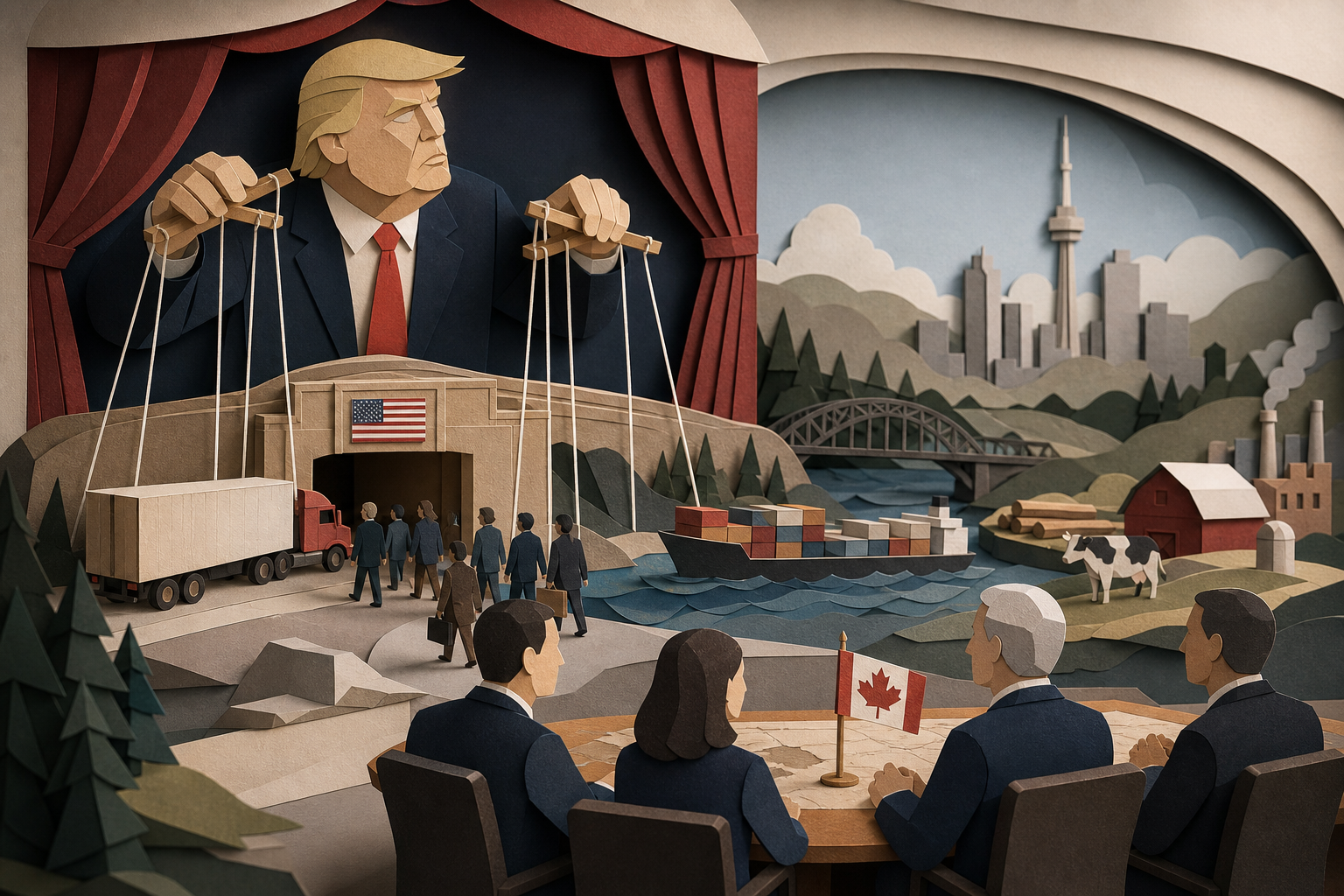
Donald Trump's proposed 10% to 20% universal tariff on all imports, plus targeted threats against Canadian autos, softwood lumber, and agricultural products, reads like a negotiation opener designed to produce panic. It should not. These statements are not policy drafts. They are price signals. The U.S. administration is treating access to the American consumer market as a privilege to be purchased through concessions on dairy quotas, digital services taxes, or defense spending. Canada's challenge is not to win the argument on economic logic. The challenge is to recognize the game being played and respond without feeding the theatre.
The Structural Imbalance Is Real
Canada sends roughly 77% of its total goods exports to the United States. The two countries exchange approximately $3.6 billion worth of goods every day. A single automotive component can cross the Canada-U.S. border up to seven times before final assembly. That integration creates enormous vulnerability when one side decides rules no longer bind the relationship.
The U.S. knows this. Canada is the largest export market for 36 U.S. states, creating domestic lobbying pressure against full-scale disruption, but asymmetry favors the larger party. The U.S. can threaten Canada's export base without risking its own economic stability. Canada cannot do the reverse. That imbalance is the structural fact underlying every tariff threat since 2016, and it will outlast this administration.
Retaliation Has Limits
The conventional response to U.S. tariffs is proportional retaliation targeting products from politically sensitive congressional districts. Canada used this successfully in 2018, slapping duties on bourbon, Florida orange juice, and Wisconsin dairy. It worked because midterm elections gave those representatives an incentive to push back.
But retaliation carries costs that compound over time. Tariffs on U.S. goods raise domestic prices for Canadian businesses relying on imported components and Canadian consumers buying finished products. Sustained tit-for-tat escalation becomes inflationary, and inflation undermines the domestic political stability required to maintain a hardline trade posture. Canada can retaliate once or twice. It cannot afford a multi-year trade war.
The Inflation Trap Works Both Ways
Universal tariffs in the range Trump has proposed would raise prices across the board in the United States. A 10% tariff on all imports is, functionally, a broad consumption tax. Voters notice. The political blowback from sustained inflation is why most tariff threats remain threats rather than implemented policy. Treating every statement as an imminent action gives those threats more power than they deserve.
The 2026 CUSMA review creates a legal window for renegotiation or termination, but walking away from North American supply chains would impose adjustment costs the U.S. economy is not structured to absorb quickly. Threatening to do so is cheap. Actually doing it is not.
What Quiet Preparation Looks Like
Canada's most effective response is not public rebuttal but technical preparation. That means provincial governments activating business networks in the states they supply. Ontario auto parts manufacturers talking directly to Michigan assembly plants. Alberta energy producers reinforcing relationships with U.S. utilities. British Columbia lumber exporters working county-level officials in Washington and Oregon.
It also means preparing retaliatory lists that can be deployed if necessary, but not announcing them as counter-threats. The goal is to signal resolve to U.S. domestic stakeholders who have leverage over congressional delegations, not to generate headlines that reinforce the narrative of crisis.
Section 232 of the Trade Expansion Act of 1962 gives the U.S. President broad authority to impose tariffs on national security grounds without Congressional approval. That power is real. But using it to target Canadian dairy or autos stretches the legal framework in ways that courts and trade bodies can challenge, slowly, over years. Legal process matters less than lobbying, but it provides a secondary track.
Theatre Requires an Audience
Tariff threats work when they generate the reaction they are designed to produce: public anxiety, editorial hand-wringing, and political pressure to offer preemptive concessions. Declining to perform that role does not eliminate the risk. It just removes one tool from the other side's kit.
Trade policy has shifted from liberalization to leverage. That shift is structural, bipartisan, and durable. Canada cannot reverse it through argument. What it can do is treat theatre as theatre and prepare for the outcomes that actually matter: protecting market access through direct engagement with U.S. business and political constituencies, not through cable news exchanges with an administration that thrives on spectacle.



The White House website now lists a trade policy goal that would have been unthinkable a decade ago: "strategic autarky." Not freer trade. Not mutual benefit. Self-sufficiency through leverage. That shift tells you everything you need to know about the nature of tariff threats flowing across the border.
Donald Trump's proposed 10% to 20% universal tariff on all imports, plus targeted threats against Canadian autos, softwood lumber, and agricultural products, reads like a negotiation opener designed to produce panic. It should not. These statements are not policy drafts. They are price signals. The U.S. administration is treating access to the American consumer market as a privilege to be purchased through concessions on dairy quotas, digital services taxes, or defense spending. Canada's challenge is not to win the argument on economic logic. The challenge is to recognize the game being played and respond without feeding the theatre.
The Structural Imbalance Is Real
Canada sends roughly 77% of its total goods exports to the United States. The two countries exchange approximately $3.6 billion worth of goods every day. A single automotive component can cross the Canada-U.S. border up to seven times before final assembly. That integration creates enormous vulnerability when one side decides rules no longer bind the relationship.
The U.S. knows this. Canada is the largest export market for 36 U.S. states, creating domestic lobbying pressure against full-scale disruption, but asymmetry favors the larger party. The U.S. can threaten Canada's export base without risking its own economic stability. Canada cannot do the reverse. That imbalance is the structural fact underlying every tariff threat since 2016, and it will outlast this administration.
Retaliation Has Limits
The conventional response to U.S. tariffs is proportional retaliation targeting products from politically sensitive congressional districts. Canada used this successfully in 2018, slapping duties on bourbon, Florida orange juice, and Wisconsin dairy. It worked because midterm elections gave those representatives an incentive to push back.
But retaliation carries costs that compound over time. Tariffs on U.S. goods raise domestic prices for Canadian businesses relying on imported components and Canadian consumers buying finished products. Sustained tit-for-tat escalation becomes inflationary, and inflation undermines the domestic political stability required to maintain a hardline trade posture. Canada can retaliate once or twice. It cannot afford a multi-year trade war.
The Inflation Trap Works Both Ways
Universal tariffs in the range Trump has proposed would raise prices across the board in the United States. A 10% tariff on all imports is, functionally, a broad consumption tax. Voters notice. The political blowback from sustained inflation is why most tariff threats remain threats rather than implemented policy. Treating every statement as an imminent action gives those threats more power than they deserve.
The 2026 CUSMA review creates a legal window for renegotiation or termination, but walking away from North American supply chains would impose adjustment costs the U.S. economy is not structured to absorb quickly. Threatening to do so is cheap. Actually doing it is not.
What Quiet Preparation Looks Like
Canada's most effective response is not public rebuttal but technical preparation. That means provincial governments activating business networks in the states they supply. Ontario auto parts manufacturers talking directly to Michigan assembly plants. Alberta energy producers reinforcing relationships with U.S. utilities. British Columbia lumber exporters working county-level officials in Washington and Oregon.
It also means preparing retaliatory lists that can be deployed if necessary, but not announcing them as counter-threats. The goal is to signal resolve to U.S. domestic stakeholders who have leverage over congressional delegations, not to generate headlines that reinforce the narrative of crisis.
Section 232 of the Trade Expansion Act of 1962 gives the U.S. President broad authority to impose tariffs on national security grounds without Congressional approval. That power is real. But using it to target Canadian dairy or autos stretches the legal framework in ways that courts and trade bodies can challenge, slowly, over years. Legal process matters less than lobbying, but it provides a secondary track.
Theatre Requires an Audience
Tariff threats work when they generate the reaction they are designed to produce: public anxiety, editorial hand-wringing, and political pressure to offer preemptive concessions. Declining to perform that role does not eliminate the risk. It just removes one tool from the other side's kit.
Trade policy has shifted from liberalization to leverage. That shift is structural, bipartisan, and durable. Canada cannot reverse it through argument. What it can do is treat theatre as theatre and prepare for the outcomes that actually matter: protecting market access through direct engagement with U.S. business and political constituencies, not through cable news exchanges with an administration that thrives on spectacle.
Read Next
How Dual Citizens Can Claim RESP Tax Benefits Without Form 3520 Reporting
Bond Markets Are Pricing In Recovery, Not the 1970s Replay Already Underway
Why Fortress Tells Private Credit Lenders to Stop Chasing AI Data Centre Deals
Canada's Tax Code Punishes Work and Rewards Wealth Hoarding: Four Reforms That Would Actually Fix It