Walking Away From Your Mortgage Doesn't Work the Same Way in Canada
A Mississauga couple bought their first home in early 2022 for $1.1 million with 5% down. By late 2023, a comparable unit three doors away sold for $820,000. They now owe more than the place will fetch, and the five-year fixed they signed at 2.39% is up for renewal at rates pushing 5%. Walking away feels rational. Mail the keys back, cut the loss, start over.
That's not how it works here.
The Recourse Problem
Canadian mortgages are recourse loans. When a lender forecloses and sells your home for less than you owe, the shortfall doesn't vanish. The bank obtains a deficiency judgment through the court and pursues your other assets: wages, bank accounts, investment accounts, even a future inheritance. The debt follows you until it's paid or you file for bankruptcy.
Alberta and Saskatchewan have limited non-recourse provisions, but only for conventional mortgages with 20% or more down. If you put less than 20% down, meaning the loan is insured by CMHC, Sagen, or Canada Guaranty, it's recourse everywhere, including Alberta. The insurer pays the lender and then chases you with the full machinery of a Crown corporation or a well-capitalized private entity. They do not forgive and they do not forget.
The Mechanics Are Slower but No Less Brutal
In Ontario, most lenders use a Power of Sale. They don't need to visit a courtroom every week. Once you're in default, the lender issues a notice, waits the statutory period, and lists the property. They're legally required to sell at fair market value, but "fair" in a falling market still leaves a gap. You get any leftover equity. More often, you get a bill.
In British Columbia, Alberta, and Quebec, the process is a Judicial Sale, which means more court oversight and a longer timeline. The outcome is identical. The home sells. The math is done. If there's a deficiency, the lender comes for it.
The credit damage is immediate and severe. A foreclosure triggers an R9 rating, the lowest possible score. It stays on your file for six to seven years. Your score can drop 150 to 300 points. Renting becomes harder. Car loans, if you can get one, come with subprime rates. Some employers run credit checks.
The Insurance Trap
Borrowers often misunderstand what mortgage default insurance protects. It protects the lender, not you. You paid the premium, anywhere from 0.60% to 4.00% of the loan amount, typically rolled into the mortgage, so the bank would lend to you with a small down payment. When you default, the insurer makes the bank whole and then turns its attention to you. CMHC doesn't write off losses. It pursues them.
The Deficiency Judgment Has Teeth
In Ontario, a lender has two years from the date of default to sue for a deficiency. That's not two years to collect. That's two years to file. Once the judgment is granted, it's enforceable for decades if renewed. Wage garnishment is common. The judgment accrues interest. The original shortfall of $80,000 becomes $120,000 if you ignore it long enough.
Walking away in the US, particularly in non-recourse states like California or Arizona, meant the bank ate the loss. In Canada, the bank does not eat the loss. You do, either by paying it or by filing a consumer proposal or bankruptcy to discharge it, which brings its own five-year consequences and mandatory financial counselling.
The couple in Mississauga would be better off negotiating. A short sale, where the lender agrees to accept less than the balance owed, often results in a settlement on the deficiency. Lenders do not want to own real estate. They want performing loans. The threat of walking away has no leverage if the law already gives them everything they need to follow you.


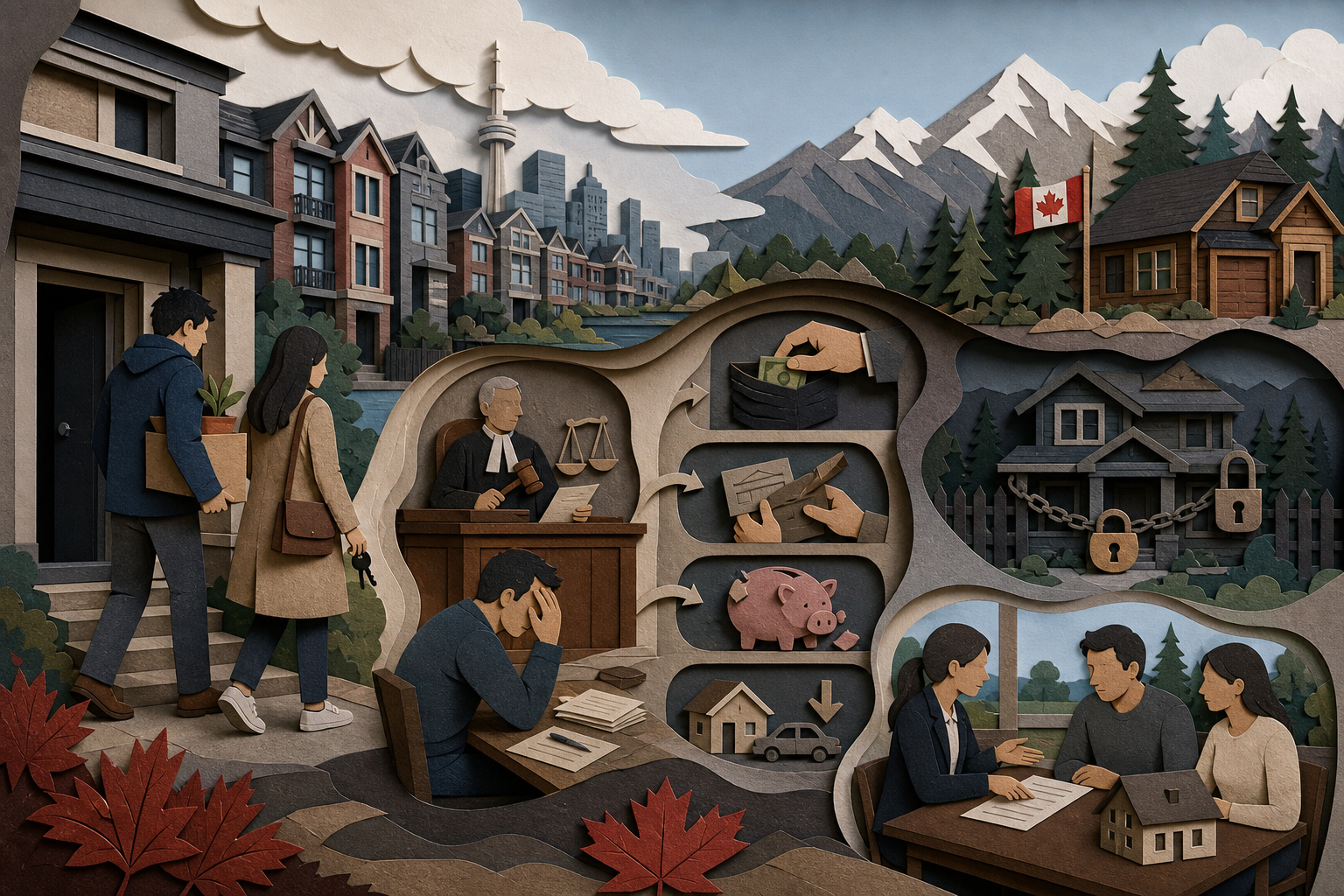

A Mississauga couple bought their first home in early 2022 for $1.1 million with 5% down. By late 2023, a comparable unit three doors away sold for $820,000. They now owe more than the place will fetch, and the five-year fixed they signed at 2.39% is up for renewal at rates pushing 5%. Walking away feels rational. Mail the keys back, cut the loss, start over.
That's not how it works here.
The Recourse Problem
Canadian mortgages are recourse loans. When a lender forecloses and sells your home for less than you owe, the shortfall doesn't vanish. The bank obtains a deficiency judgment through the court and pursues your other assets: wages, bank accounts, investment accounts, even a future inheritance. The debt follows you until it's paid or you file for bankruptcy.
Alberta and Saskatchewan have limited non-recourse provisions, but only for conventional mortgages with 20% or more down. If you put less than 20% down, meaning the loan is insured by CMHC, Sagen, or Canada Guaranty, it's recourse everywhere, including Alberta. The insurer pays the lender and then chases you with the full machinery of a Crown corporation or a well-capitalized private entity. They do not forgive and they do not forget.
The Mechanics Are Slower but No Less Brutal
In Ontario, most lenders use a Power of Sale. They don't need to visit a courtroom every week. Once you're in default, the lender issues a notice, waits the statutory period, and lists the property. They're legally required to sell at fair market value, but "fair" in a falling market still leaves a gap. You get any leftover equity. More often, you get a bill.
In British Columbia, Alberta, and Quebec, the process is a Judicial Sale, which means more court oversight and a longer timeline. The outcome is identical. The home sells. The math is done. If there's a deficiency, the lender comes for it.
The credit damage is immediate and severe. A foreclosure triggers an R9 rating, the lowest possible score. It stays on your file for six to seven years. Your score can drop 150 to 300 points. Renting becomes harder. Car loans, if you can get one, come with subprime rates. Some employers run credit checks.
The Insurance Trap
Borrowers often misunderstand what mortgage default insurance protects. It protects the lender, not you. You paid the premium, anywhere from 0.60% to 4.00% of the loan amount, typically rolled into the mortgage, so the bank would lend to you with a small down payment. When you default, the insurer makes the bank whole and then turns its attention to you. CMHC doesn't write off losses. It pursues them.
The Deficiency Judgment Has Teeth
In Ontario, a lender has two years from the date of default to sue for a deficiency. That's not two years to collect. That's two years to file. Once the judgment is granted, it's enforceable for decades if renewed. Wage garnishment is common. The judgment accrues interest. The original shortfall of $80,000 becomes $120,000 if you ignore it long enough.
Walking away in the US, particularly in non-recourse states like California or Arizona, meant the bank ate the loss. In Canada, the bank does not eat the loss. You do, either by paying it or by filing a consumer proposal or bankruptcy to discharge it, which brings its own five-year consequences and mandatory financial counselling.
The couple in Mississauga would be better off negotiating. A short sale, where the lender agrees to accept less than the balance owed, often results in a settlement on the deficiency. Lenders do not want to own real estate. They want performing loans. The threat of walking away has no leverage if the law already gives them everything they need to follow you.
Read Next
How Dual Citizens Can Claim RESP Tax Benefits Without Form 3520 Reporting
Bond Markets Are Pricing In Recovery, Not the 1970s Replay Already Underway
Why Fortress Tells Private Credit Lenders to Stop Chasing AI Data Centre Deals
Canada's Tax Code Punishes Work and Rewards Wealth Hoarding: Four Reforms That Would Actually Fix It