Washington demands Canada drop counter-tariffs or face escalation
Jamieson Greer, the U.S. Trade Representative, has given Canada until next week to dismantle C$15.6 billion worth of retaliatory tariffs or watch new American duties take effect. The deadline marks the sharpest turn yet in a trade dispute that began when Canada responded to earlier U.S. protectionist moves with targeted levies on politically sensitive goods, prepared foods, aluminum products, and other items chosen to pressure lawmakers in swing states.
The ultimatum arrives at a moment when both countries are already preparing for the July 1, 2026 joint review of the Canada-United States-Mexico Agreement. That review clause allows any party to signal its intent to withdraw from the deal, making these preliminary skirmishes over tariffs a preview of the larger negotiation to come. Greer's strategy appears designed to weaken Canada's bargaining position before the formal talks begin by forcing Ottawa to disarm unilaterally.
Why the retaliatory tariffs existed
Canada's counter-measures were never meant to be economically punishing in isolation. The C$15.6 billion in tariffs covered roughly $11.3 billion USD in goods, a figure that sounds large but represents a fraction of the $3.6 billion CAD that crosses the border daily. The point was deterrence, not revenue. By targeting products tied to specific congressional districts, Ottawa aimed to create domestic political pressure within the United States that would discourage further protectionist escalation.
The tactic worked until it didn't. American lawmakers in affected districts did complain, but the White House under this administration has shown little sensitivity to those complaints when trade deficits and domestic manufacturing are the stated priority. Greer's public demand suggests the U.S. now views Canada's retaliation not as a deterrent but as a provocation that justifies the next round of tariffs.
What scrapping them costs
If Canada complies, it loses its primary leverage for future disputes. The retaliatory measures were the only tool Ottawa had to impose real cost on Washington's trade actions without triggering a full breakdown of the CUSMA framework. Removing them without a reciprocal guarantee leaves Canada exposed to unilateral U.S. moves in sectors where it has no countermeasure ready, dairy, steel, energy, or the highly integrated automotive supply chain that both countries depend on.
The alternative is worse. New American tariffs next week would likely hit goods that Canada exports in volume, not goods chosen for political theatre. That means higher costs for Canadian exporters, immediate pressure on the Canadian dollar, and a knock-on effect on consumer prices that could stall the Bank of Canada's inflation progress. The overnight rate sits at 2.25 percent as of August 2026, and any inflation spike from a tariff shock would delay the easing cycle that mortgage holders and businesses are waiting for.
The 2026 review as context
Greer's timing is deliberate. The six-year CUSMA review clause was always going to be a high-stakes moment, but by forcing Canada into a one-sided de-escalation now, the U.S. enters those talks with a demonstrated willingness to threaten withdrawal and a Canadian government that has already blinked once.
Canada sends between 75 and 77 percent of its total exports to the United States. The asymmetry in that relationship has always been the structural fact governing trade disputes between the two countries. Greer's ultimatum is a reminder that asymmetry is leverage, and leverage works when you use it.


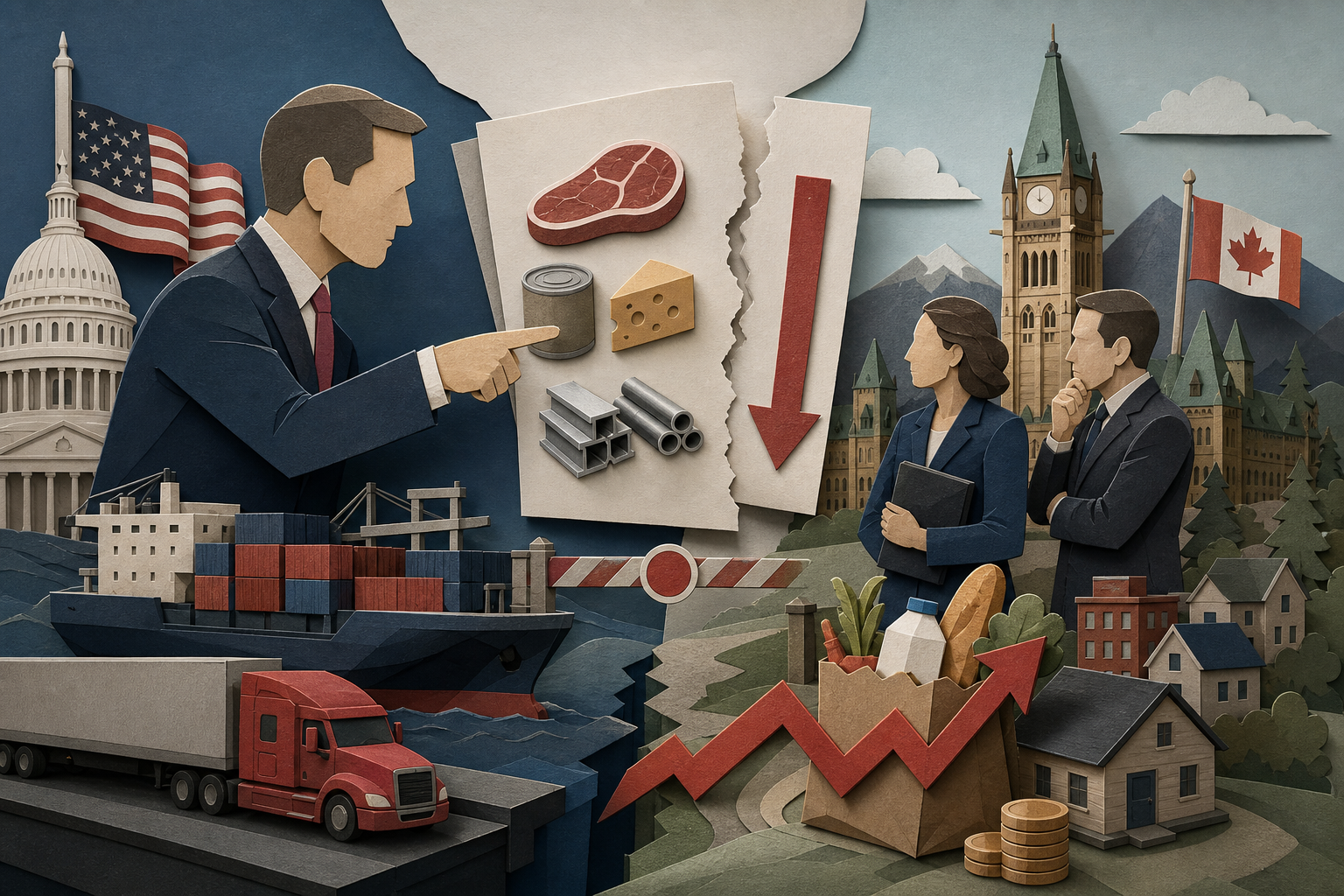

Jamieson Greer, the U.S. Trade Representative, has given Canada until next week to dismantle C$15.6 billion worth of retaliatory tariffs or watch new American duties take effect. The deadline marks the sharpest turn yet in a trade dispute that began when Canada responded to earlier U.S. protectionist moves with targeted levies on politically sensitive goods, prepared foods, aluminum products, and other items chosen to pressure lawmakers in swing states.
The ultimatum arrives at a moment when both countries are already preparing for the July 1, 2026 joint review of the Canada-United States-Mexico Agreement. That review clause allows any party to signal its intent to withdraw from the deal, making these preliminary skirmishes over tariffs a preview of the larger negotiation to come. Greer's strategy appears designed to weaken Canada's bargaining position before the formal talks begin by forcing Ottawa to disarm unilaterally.
Why the retaliatory tariffs existed
Canada's counter-measures were never meant to be economically punishing in isolation. The C$15.6 billion in tariffs covered roughly $11.3 billion USD in goods, a figure that sounds large but represents a fraction of the $3.6 billion CAD that crosses the border daily. The point was deterrence, not revenue. By targeting products tied to specific congressional districts, Ottawa aimed to create domestic political pressure within the United States that would discourage further protectionist escalation.
The tactic worked until it didn't. American lawmakers in affected districts did complain, but the White House under this administration has shown little sensitivity to those complaints when trade deficits and domestic manufacturing are the stated priority. Greer's public demand suggests the U.S. now views Canada's retaliation not as a deterrent but as a provocation that justifies the next round of tariffs.
What scrapping them costs
If Canada complies, it loses its primary leverage for future disputes. The retaliatory measures were the only tool Ottawa had to impose real cost on Washington's trade actions without triggering a full breakdown of the CUSMA framework. Removing them without a reciprocal guarantee leaves Canada exposed to unilateral U.S. moves in sectors where it has no countermeasure ready, dairy, steel, energy, or the highly integrated automotive supply chain that both countries depend on.
The alternative is worse. New American tariffs next week would likely hit goods that Canada exports in volume, not goods chosen for political theatre. That means higher costs for Canadian exporters, immediate pressure on the Canadian dollar, and a knock-on effect on consumer prices that could stall the Bank of Canada's inflation progress. The overnight rate sits at 2.25 percent as of August 2026, and any inflation spike from a tariff shock would delay the easing cycle that mortgage holders and businesses are waiting for.
The 2026 review as context
Greer's timing is deliberate. The six-year CUSMA review clause was always going to be a high-stakes moment, but by forcing Canada into a one-sided de-escalation now, the U.S. enters those talks with a demonstrated willingness to threaten withdrawal and a Canadian government that has already blinked once.
Canada sends between 75 and 77 percent of its total exports to the United States. The asymmetry in that relationship has always been the structural fact governing trade disputes between the two countries. Greer's ultimatum is a reminder that asymmetry is leverage, and leverage works when you use it.
Sources
Read Next
How Dual Citizens Can Claim RESP Tax Benefits Without Form 3520 Reporting
Bond Markets Are Pricing In Recovery, Not the 1970s Replay Already Underway
Why Fortress Tells Private Credit Lenders to Stop Chasing AI Data Centre Deals
Canada's Tax Code Punishes Work and Rewards Wealth Hoarding: Four Reforms That Would Actually Fix It