Why Your TFSA Shouldn't Be a Savings Account: The Six-Figure Mistake Young Canadians Make
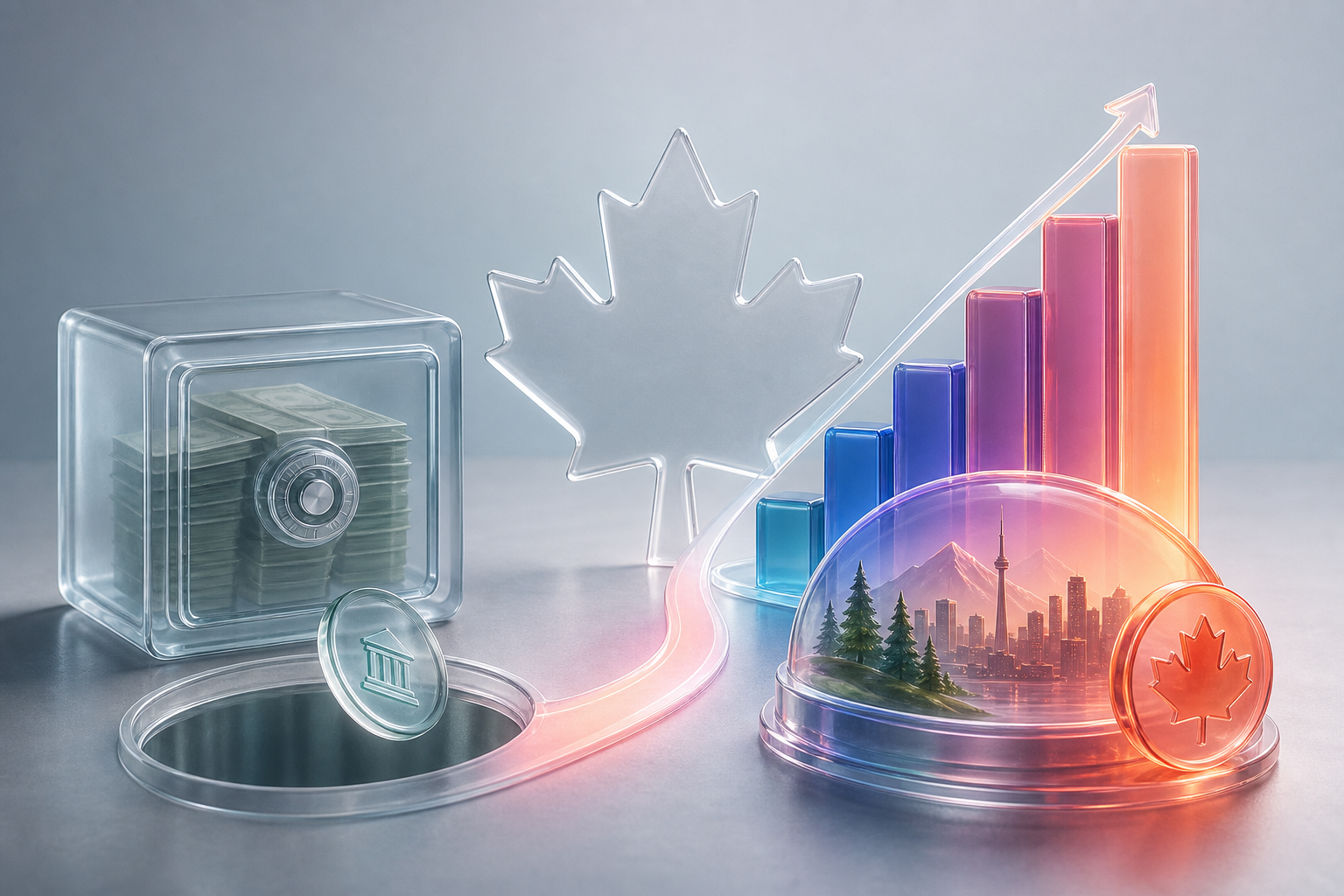
A 25-year-old who puts $7,000 into a Tax-Free Savings Account earning 4% in a high-interest savings account will have roughly $8,920 after five years. The same $7,000 in a diversified equity ETF earning 7% annually, the approximate historical return of the S&P/TSX Composite, becomes $9,834. That $1,303 gap is entirely tax-free. Scale that across $109,000 of lifetime contribution room and a 40-year timeline, and the difference is six figures.
The problem isn't awareness. It's nomenclature. The Canada Revenue Agency named it a "savings" account, and a generation took that literally.
Cash is wasting the shelter
Over 40% of TFSA holders keep their money in cash or GICs, according to industry surveys. That made some sense in 2010 when interest rates were sub-2% and the marginal tax rate on dividends was the main selling point. It makes less sense now, when the tax-free compounding engine is the actual value.
The TFSA was introduced in 2009 to encourage long-term wealth accumulation. The structure is the reverse of an RRSP: you contribute after-tax dollars, but every dollar of growth, capital gains, dividends, interest, comes out tax-free. For someone in their twenties, that means 40 years of compounding sheltered from the CRA. A $50,000 portfolio that doubles three times by retirement becomes $400,000, and not a cent of the $350,000 gain is taxable.
Holding cash forfeits that. A 4% savings account in a TFSA is tax-free, yes, but there's nothing to shelter. The benefit only materializes when there are meaningful gains to protect. Parking money at rates that barely outpace inflation is using a limited tax shelter to save a few hundred dollars a year. The same dollars in equities could be shielding thousands.
The flexibility trap
The TFSA allows withdrawals at any time, and that flexibility is exactly why younger account holders treat it as a revolving fund. Vacation in March, new laptop in June, emergency car repair in September. Every withdrawal is allowed. Every one also interrupts compounding.
Worse, the contribution room mechanic creates a psychological trap. When you withdraw $5,000, that amount is added back to your contribution room, but not until January 1 of the following year. Re-contribute in November and you're over the limit. The penalty is 1% per month on the excess, which the CRA assesses without warning.
Millennials and Gen Z face legitimate liquidity pressures: higher rent-to-income ratios, student debt, volatile employment. But using the TFSA as a short-term cash buffer is solving the wrong problem. Emergency funds belong in a regular savings account. The TFSA's value is time.
What a long-term TFSA actually looks like
If you're 30 and you've never contributed, you have $109,000 of cumulative room as of 2026. Max it out in one lump sum (inheritance, bonus, sale of an asset), invest it in a low-cost equity index fund at 7% annually, and leave it untouched for 30 years. At age 60, that account is worth roughly $830,000. Tax bill: zero.
The same $109,000 in a non-registered account at a 30% marginal rate on capital gains leaves you with about $720,000 after tax. The TFSA saved $110,000, and that's conservative math assuming no dividends and a single contribution.
Most people won't have $109,000 to invest at once. The point holds at smaller scale. A 22-year-old contributing $500 a month to a TFSA invested in equities will accumulate more wealth by 65 than someone contributing $700 a month to a savings account, even accounting for the tax-free interest.
The account works. The name doesn't. If you're under 40 and your TFSA balance is sitting in a 4% account, you're not playing it safe. You're leaving money the CRA will never touch on a table you'll never get back to.



A 25-year-old who puts $7,000 into a Tax-Free Savings Account earning 4% in a high-interest savings account will have roughly $8,920 after five years. The same $7,000 in a diversified equity ETF earning 7% annually, the approximate historical return of the S&P/TSX Composite, becomes $9,834. That $1,303 gap is entirely tax-free. Scale that across $109,000 of lifetime contribution room and a 40-year timeline, and the difference is six figures.
The problem isn't awareness. It's nomenclature. The Canada Revenue Agency named it a "savings" account, and a generation took that literally.
Cash is wasting the shelter
Over 40% of TFSA holders keep their money in cash or GICs, according to industry surveys. That made some sense in 2010 when interest rates were sub-2% and the marginal tax rate on dividends was the main selling point. It makes less sense now, when the tax-free compounding engine is the actual value.
The TFSA was introduced in 2009 to encourage long-term wealth accumulation. The structure is the reverse of an RRSP: you contribute after-tax dollars, but every dollar of growth, capital gains, dividends, interest, comes out tax-free. For someone in their twenties, that means 40 years of compounding sheltered from the CRA. A $50,000 portfolio that doubles three times by retirement becomes $400,000, and not a cent of the $350,000 gain is taxable.
Holding cash forfeits that. A 4% savings account in a TFSA is tax-free, yes, but there's nothing to shelter. The benefit only materializes when there are meaningful gains to protect. Parking money at rates that barely outpace inflation is using a limited tax shelter to save a few hundred dollars a year. The same dollars in equities could be shielding thousands.
The flexibility trap
The TFSA allows withdrawals at any time, and that flexibility is exactly why younger account holders treat it as a revolving fund. Vacation in March, new laptop in June, emergency car repair in September. Every withdrawal is allowed. Every one also interrupts compounding.
Worse, the contribution room mechanic creates a psychological trap. When you withdraw $5,000, that amount is added back to your contribution room, but not until January 1 of the following year. Re-contribute in November and you're over the limit. The penalty is 1% per month on the excess, which the CRA assesses without warning.
Millennials and Gen Z face legitimate liquidity pressures: higher rent-to-income ratios, student debt, volatile employment. But using the TFSA as a short-term cash buffer is solving the wrong problem. Emergency funds belong in a regular savings account. The TFSA's value is time.
What a long-term TFSA actually looks like
If you're 30 and you've never contributed, you have $109,000 of cumulative room as of 2026. Max it out in one lump sum (inheritance, bonus, sale of an asset), invest it in a low-cost equity index fund at 7% annually, and leave it untouched for 30 years. At age 60, that account is worth roughly $830,000. Tax bill: zero.
The same $109,000 in a non-registered account at a 30% marginal rate on capital gains leaves you with about $720,000 after tax. The TFSA saved $110,000, and that's conservative math assuming no dividends and a single contribution.
Most people won't have $109,000 to invest at once. The point holds at smaller scale. A 22-year-old contributing $500 a month to a TFSA invested in equities will accumulate more wealth by 65 than someone contributing $700 a month to a savings account, even accounting for the tax-free interest.
The account works. The name doesn't. If you're under 40 and your TFSA balance is sitting in a 4% account, you're not playing it safe. You're leaving money the CRA will never touch on a table you'll never get back to.
Sources
Read Next
How Dual Citizens Can Claim RESP Tax Benefits Without Form 3520 Reporting
Bond Markets Are Pricing In Recovery, Not the 1970s Replay Already Underway
Why Fortress Tells Private Credit Lenders to Stop Chasing AI Data Centre Deals
Canada's Tax Code Punishes Work and Rewards Wealth Hoarding: Four Reforms That Would Actually Fix It