Your Reverse Mortgage Isn't Costing You Anything Because Your Children Are Paying For It
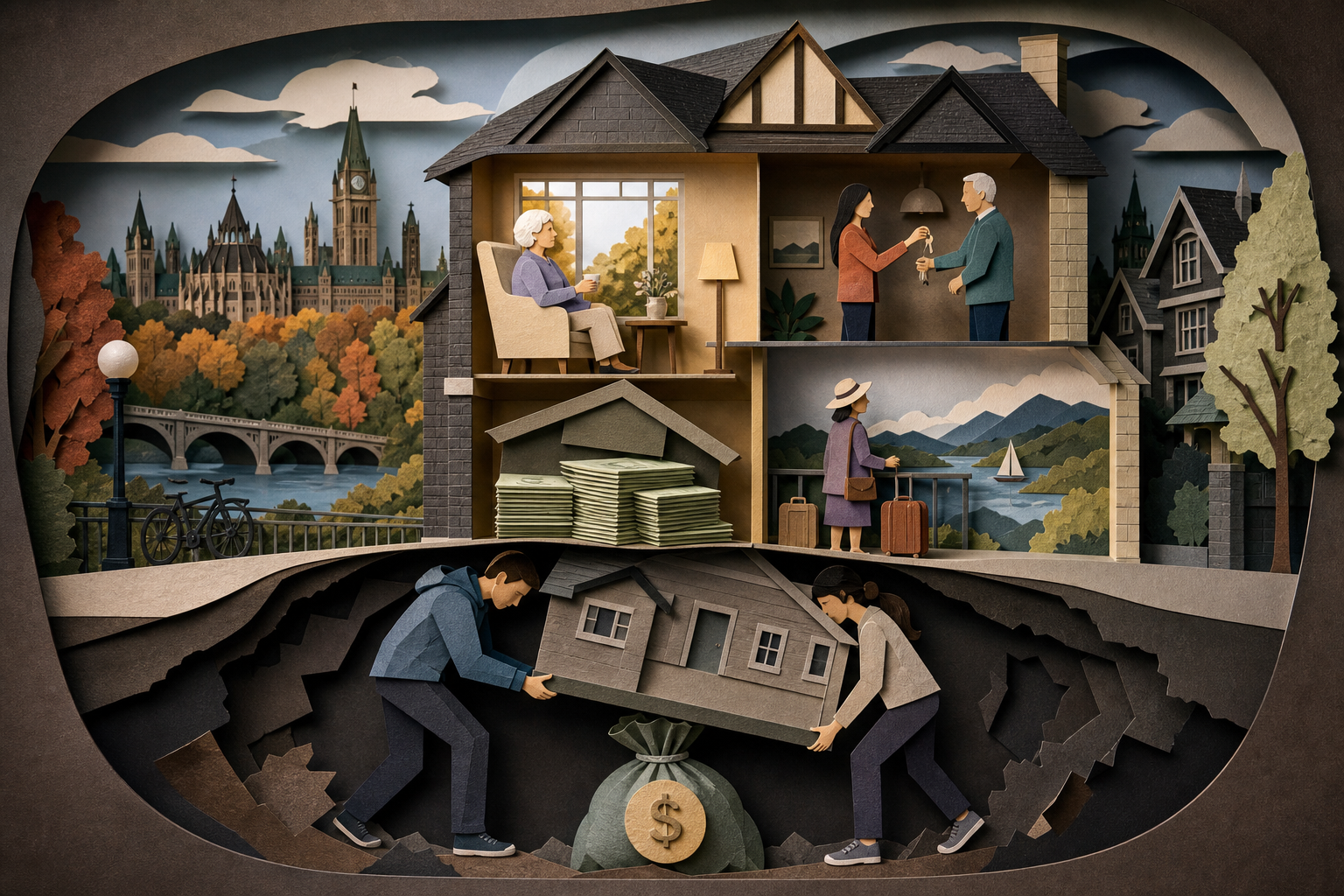
A 62-year-old in Westboro takes out a reverse mortgage for $275,000 against a $750,000 home. No monthly payments. No income tax. The bank says she'll never owe more than the house is worth. She uses the money to fund her retirement, help her daughter with a down payment, and travel. Twenty years later, when the house sells for $950,000, the loan balance has compounded to $812,000 at 6.39% annually. Her kids inherit $138,000 instead of $950,000.
The reverse mortgage didn't cost her anything. She never made a payment. It cost her children $812,000 in foregone inheritance.
That's the actual cost structure of these products, and it's the part the brochures glide over. Reverse mortgages are marketed as a way for retirees to unlock home equity without selling or making payments. Both claims are true. What's also true: compound interest on a loan you never service is an estate liquidation mechanism dressed up as retirement income. The interest doesn't disappear. It capitalizes monthly, accruing interest on interest, until the house is sold and the debt is settled. The borrower experiences it as free money. The heirs experience it as a drastically smaller inheritance.
HomeEquity Bank's CHIP Reverse Mortgage, which dominates the Canadian market, charges between 6.39% and 6.86% as of mid-2026.[1] A standard five-year fixed mortgage in the same period runs between 3.94% and 4.09%.[2] That spread exists because the lender is taking on longevity risk and property value risk. The borrower might live 30 years. The house might not appreciate. The lender prices those risks into the rate, and the heirs pay the premium.
The Tax Arbitrage Only Works If You Were Going to Burn RRIF Withdrawals Anyway
The one case where reverse mortgages create genuine family value is when the alternative is pulling money from a RRIF at a high marginal tax rate. A $200,000 RRIF withdrawal for a retiree in the top Ontario bracket gets taxed at over 53%. The same $200,000 from a reverse mortgage is tax-free loan proceeds. If the parent was going to drain the RRIF to fund consumption, the reverse mortgage preserves the RRIF's growth, potentially leaving the estate with more net wealth despite the mortgage debt.
That scenario requires two conditions: the parent has a large RRIF, and they were planning to spend it anyway. Most reverse mortgage borrowers in Ottawa's established neighbourhoods don't fit that profile. They're equity-rich and cash-poor, with modest RRSPs and no immediate liquidity crisis. The reverse mortgage isn't replacing taxable withdrawals. It's replacing the decision to downsize or live within pension income.
The Downsizing Comparison Almost Always Favours Selling
A $750,000 home in the Glebe could sell and convert into a $450,000 condo, releasing $300,000 in cash after transaction costs. No compounding debt. No interest rate spread. The retiree funds the same lifestyle, and the estate still holds the condo's value. The reverse mortgage alternative leaves the retiree in the same house but compounds away $300,000 to $500,000 in equity over 15 to 20 years, depending on rate and longevity.
The argument against downsizing is usually emotional, not financial. The house holds decades of family history. The neighbourhood matters. Moving is disruptive. All true. But framing the reverse mortgage as a way to "stay in your home" hides what it actually is: a decision to spend your children's inheritance to avoid the inconvenience of moving.
The Living Inheritance Pitch Is a Different Calculation
Some families use reverse mortgages strategically. The parent pulls $200,000 and gifts it to a child for a down payment. Under OSFI's stress test, the child must qualify at their contract rate plus 2% or 5.25%, whichever is higher.[4] The parent's reverse mortgage compounds at 6.39%, but the family avoids the child servicing a higher-rate mortgage for 25 years. That can work, but only if the child actually needed the money now and the house appreciates enough to cover the compounding debt.
If Ottawa real estate appreciates at 3% annually and the reverse mortgage compounds at 6.39%, the debt grows faster than the asset. The math only holds if you believe the neighbourhood will outpace that spread or if the family values the child's current liquidity more than the terminal estate value.
The reverse mortgage isn't free money. It's a loan your estate repays.



A 62-year-old in Westboro takes out a reverse mortgage for $275,000 against a $750,000 home. No monthly payments. No income tax. The bank says she'll never owe more than the house is worth. She uses the money to fund her retirement, help her daughter with a down payment, and travel. Twenty years later, when the house sells for $950,000, the loan balance has compounded to $812,000 at 6.39% annually. Her kids inherit $138,000 instead of $950,000.
The reverse mortgage didn't cost her anything. She never made a payment. It cost her children $812,000 in foregone inheritance.
That's the actual cost structure of these products, and it's the part the brochures glide over. Reverse mortgages are marketed as a way for retirees to unlock home equity without selling or making payments. Both claims are true. What's also true: compound interest on a loan you never service is an estate liquidation mechanism dressed up as retirement income. The interest doesn't disappear. It capitalizes monthly, accruing interest on interest, until the house is sold and the debt is settled. The borrower experiences it as free money. The heirs experience it as a drastically smaller inheritance.
HomeEquity Bank's CHIP Reverse Mortgage, which dominates the Canadian market, charges between 6.39% and 6.86% as of mid-2026.[1] A standard five-year fixed mortgage in the same period runs between 3.94% and 4.09%.[2] That spread exists because the lender is taking on longevity risk and property value risk. The borrower might live 30 years. The house might not appreciate. The lender prices those risks into the rate, and the heirs pay the premium.
The Tax Arbitrage Only Works If You Were Going to Burn RRIF Withdrawals Anyway
The one case where reverse mortgages create genuine family value is when the alternative is pulling money from a RRIF at a high marginal tax rate. A $200,000 RRIF withdrawal for a retiree in the top Ontario bracket gets taxed at over 53%. The same $200,000 from a reverse mortgage is tax-free loan proceeds. If the parent was going to drain the RRIF to fund consumption, the reverse mortgage preserves the RRIF's growth, potentially leaving the estate with more net wealth despite the mortgage debt.
That scenario requires two conditions: the parent has a large RRIF, and they were planning to spend it anyway. Most reverse mortgage borrowers in Ottawa's established neighbourhoods don't fit that profile. They're equity-rich and cash-poor, with modest RRSPs and no immediate liquidity crisis. The reverse mortgage isn't replacing taxable withdrawals. It's replacing the decision to downsize or live within pension income.
The Downsizing Comparison Almost Always Favours Selling
A $750,000 home in the Glebe could sell and convert into a $450,000 condo, releasing $300,000 in cash after transaction costs. No compounding debt. No interest rate spread. The retiree funds the same lifestyle, and the estate still holds the condo's value. The reverse mortgage alternative leaves the retiree in the same house but compounds away $300,000 to $500,000 in equity over 15 to 20 years, depending on rate and longevity.
The argument against downsizing is usually emotional, not financial. The house holds decades of family history. The neighbourhood matters. Moving is disruptive. All true. But framing the reverse mortgage as a way to "stay in your home" hides what it actually is: a decision to spend your children's inheritance to avoid the inconvenience of moving.
The Living Inheritance Pitch Is a Different Calculation
Some families use reverse mortgages strategically. The parent pulls $200,000 and gifts it to a child for a down payment. Under OSFI's stress test, the child must qualify at their contract rate plus 2% or 5.25%, whichever is higher.[4] The parent's reverse mortgage compounds at 6.39%, but the family avoids the child servicing a higher-rate mortgage for 25 years. That can work, but only if the child actually needed the money now and the house appreciates enough to cover the compounding debt.
If Ottawa real estate appreciates at 3% annually and the reverse mortgage compounds at 6.39%, the debt grows faster than the asset. The math only holds if you believe the neighbourhood will outpace that spread or if the family values the child's current liquidity more than the terminal estate value.
The reverse mortgage isn't free money. It's a loan your estate repays.
Sources
Read Next
How Dual Citizens Can Claim RESP Tax Benefits Without Form 3520 Reporting
Bond Markets Are Pricing In Recovery, Not the 1970s Replay Already Underway
Why Fortress Tells Private Credit Lenders to Stop Chasing AI Data Centre Deals
Canada's Tax Code Punishes Work and Rewards Wealth Hoarding: Four Reforms That Would Actually Fix It